
Limited-Time Offer
Buy 4 Windows, Get 1 Free
Window Replacement in Paducah, KY
Custom replacement windows, professional installation, and long-term support from Windows USA in Paducah
Schedule a FREE In-Home Consultation
This site is protected by reCAPTCHA and the Google Privacy Policy (opens in a new tab) and Terms of Service (opens in a new tab) apply.
or call (800) 272-2085
 Rated 4.7
  4.7Rated 4.7
 A+ratingA+rating
 certifiedEnergy Starcertified
A House Between Two Rivers
Paducah sits where the Tennessee River empties into the Ohio, and the town has organized itself around that fact since long before anyone here was buying windows. Two rivers means twice the surface water breathing moisture into the air over your neighborhood, and it means the humid conditions that define a western Kentucky summer do not politely end when the season does. Climate records for the region are published by the National Weather Service office serving Paducah (opens in a new tab), and the picture they describe is a damp one across most of the calendar rather than a few months of it.
A window is the thinnest part of the wall, and it is the only part with moving joints. Humid outdoor air presses on one side of it; conditioned indoor air presses back from the other. Everything a window is asked to do at that boundary happens in three places — the frame, the meeting rail where the sashes come together, and the sealed edge of the insulated glass unit — and moisture finds whichever of the three was built worst.
That is why the seal, not the glass, is the part worth interrogating when a salesperson is in your living room. A Windows USA window uses interlocking sashes, so the two halves engage each other along the meeting rail and close it as one continuous seal rather than two surfaces resting together. Weep holes give water that reaches the frame a deliberate route back outside instead of a low spot to sit in. Intercept® Ultra spacers hold the glass unit airtight at its edge — the first place insulated glass fails, and the reason so many older replacement windows around here are permanently fogged between the panes. And the vinyl itself absorbs nothing, so it will not swell shut in August and shrink open in October the way wood sash does.
January 2009, and the Winter Side of the Ledger
Nobody in this part of Kentucky needs a reminder that winter here is serious. The ice storm that moved through in late January 2009 coated western Kentucky heavily enough to bring down limbs, lines, and poles across the region, and it left large parts of the area without power for an extended stretch in the cold. It remains the reference point people reach for when a forecast mentions freezing rain.
We are not going to use that memory to sell you something a window cannot do. No residential window is protection against a severe weather event; nothing installed in a house wall is. What that week did demonstrate, in the most direct way available, is how much the building envelope matters when the heat stops. A house that holds its heat holds it for hours longer than a house that leaks it through single panes and gapped sash, and that difference is measured in comfort and safety, not just on a bill.
The ordinary version of the same problem runs all winter without making the news. Western Kentucky cycles across the freezing point repeatedly rather than settling into one long freeze, and every crossing is a mechanical event for a window: materials expand, contract, and any water sitting in a joint expands with them. Multiply that by a few decades and a joint that was tight in 1975 is a draft you can feel from the couch. Vinyl moves less than wood or aluminum, takes on no water, and needs no paint film to keep doing so — which is the unglamorous reason it took over this market.
Hot, Humid Summers Complete the Load
The other half of the year asks the opposite question of the same assembly. A Paducah summer is hot and heavy with moisture, air conditioners run long hours, and the sun coming through an untreated pane is a load your system has to remove after it is already inside the room. One set of windows has to answer both halves without being optimized for either, which is the standard our units are built to: ENERGY STAR certified configurations pairing Cardinal Low-E 366 glass with argon fill, slowing heat leaving the house in January and rejecting solar heat trying to push in through July.
ENERGY STAR states the return plainly: “Replacing old windows with ENERGY STAR certified windows lowers household energy bills by an average of up to 13 percent nationwide when replacing single-pane windows. Lower energy consumption also reduces greenhouse gas emissions from power plants and homes.” In a climate carrying two real loads, that saving arrives twice a year instead of once.
Lowertown, Tall Openings, and Why Nothing Comes Off a Shelf
Paducah has an unusually good stock of old houses, and Lowertown is the clearest example of it — a historic district of homes largely built in the nineteenth and early twentieth centuries, restored over recent decades into one of the more distinctive residential neighborhoods in the state. Houses of that era were built with tall, narrow window openings, generous ceiling heights, and proportions that were drawn by hand rather than ordered from a catalog. Beyond Lowertown, the same is broadly true of Paducah's older residential streets, and the surrounding communities of Lone Oak, Reidland, Benton, Mayfield, and Calvert City add their own layers of mid-century and later housing.
What a century does to an opening like that is specific and predictable. Foundations settle unevenly. Masonry shifts a fraction of an inch and never shifts back. Headers sag slightly under a hundred years of roof. Somebody remodeled around a window in 1958 and somebody else painted a sash shut in 1974. The result is that a great many openings in this town are no longer square, no longer plumb, and not remotely a standard size — and the entire difference between a tight window and a permanent draft is whether the unit was built to the opening or the opening was forced to accept the unit.
This is the reason nothing we install is pulled from stock. Every window is manufactured at our Arkansas plant to the measurements our representative takes at your house, opening by opening, including the tall ones that no catalog size fits. Custom sizing is not an upgrade line on the quote; it is how the product is made. Installation is done by professional installation crews, and the company that built the window is the company that warrants it afterward.
The Ultraviolet Half of Sunlight
The CDC (opens in a new tab) publishes sunlight exposure across the continental states as an Average Daily Dose of Ultraviolet (UV) light (opens in a new tab). Kentucky sits in the middle of that range, which is precisely why homeowners here rarely think about it — the damaging portion of sunlight is not the portion you feel, and a moderate dose applied every day for thirty years does the same work as a harsh one applied briefly.
It reaches three things in a Paducah house. It reaches the people in the room, since the International Ultraviolet Association (opens in a new tab) notes that ordinary window glass is effectively transparent to UVA, which the Skin Cancer Foundation (opens in a new tab) identifies as a main cause of premature skin aging. It reaches what is in the room, fading furniture, fabrics, flooring, and artwork & photos (opens in a new tab) — no small matter in a restored home where the heart pine floors and original trim were half the reason for buying it. And it reaches the window itself: ultraviolet wavelengths penetrate solid materials (opens in a new tab), and unprotected vinyl suffers mechanical, physical and chemical degradation from solar radiation (opens in a new tab) that shows up as cracking and chalking (opens in a new tab), color shift, and lost strength.
Both problems are answered in the product rather than in an add-on. The vinyl in our windows and patio doors carries a UV inhibitor through the material, so the frame does not chalk, fade, flake, or peel on whichever wall takes the afternoon. The glass (opens in a new tab) uses a triple-layer coating that reflects solar heat back outside rather than tinting the view — better solar control than the tinted glass often fitted in warm climates, with the daylight left intact — and screens out 95% of the ultraviolet that would otherwise land on your floors.
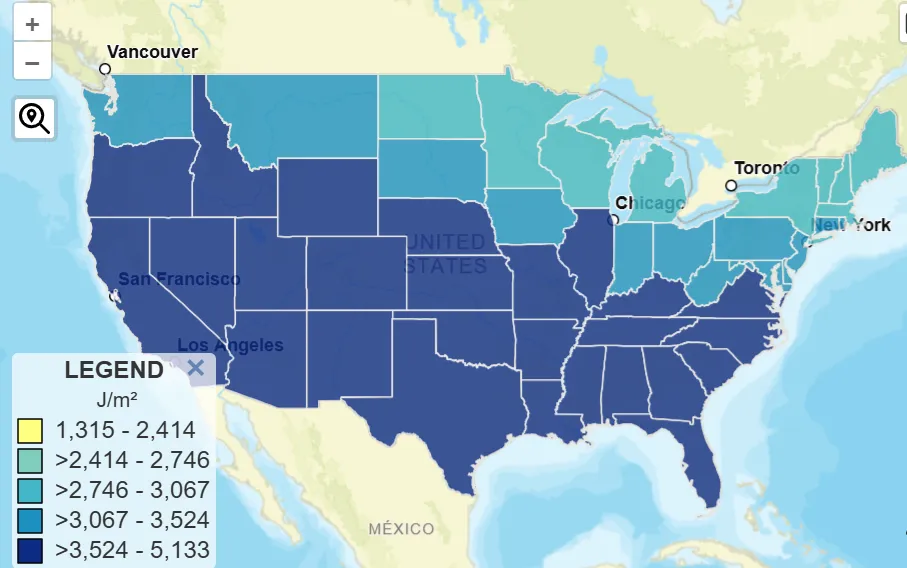
Which openings take that load depends on the direction they face, and it is a question worth settling before you choose glass. The U.S. Department of Energy (opens in a new tab) reduces the logic to a specification grid:
[Consumer Guide to Energy-Efficient Windows (opens in a new tab)]
Where a Window Actually Fails, Part by Part
It is easier to judge a quote when you know which components do the work. Four parts of the assembly account for most of what goes wrong in a river-valley climate, and each is engineered against directly:
- The frame and sash profile. Multi-chambered virgin vinyl, so heat crossing the profile has to pass through a series of sealed air pockets rather than a straight run of conductive material — and so the interior surface stays warm enough that winter condensation largely stops forming on it.
- The meeting rail. Interlocking sashes engage one another rather than resting against each other, producing one continuous seal at the moving joint that is the first thing to leak on an ordinary window.
- The edge of the glass. Intercept® Ultra spacers hold the double-pane unit airtight so the argon stays where it belongs and the panes never fog internally.
- The drainage path. Weep holes route water that gets past the exterior back outside deliberately, instead of leaving it to stand against the frame and work into the wall behind it.
Storms are where honesty matters most. Western Kentucky gets squall lines, straight-line winds, hail, and the kind of two-hour downpours that drive rain sideways into every weak joint in an old sash. A replacement window is not storm protection, and nothing in a residential wall survives a direct hit from a severe event. What good construction changes is the enormous range of weather that falls short of that — which is nearly all of it.
Factory-Direct, From the Plant Floor to Your Wall
Homeowners here ask a practical question early: who is actually responsible if something goes wrong? The answer does not require a diagram. Windows USA manufactures the windows in Arkansas, sells them without a middleman, and coordinates every job from consultation through installation. One company designed the product, built it to your measurements, and issues the transferable lifetime limited warranty behind it.
That structure is also what makes the pricing what it is. Most window quotes carry margins that have nothing to do with the window — an importer's cut, then a distributor's, then a local dealer's, each stacked on the last. Removing those layers is not a discount; it is a shorter supply chain. Nearly 60 years in business and more than 200,000 homeowners are the record behind it.
If your house still has original single-pane sash, or the cheap replacements somebody fitted decades ago, the estimate costs nothing and answers the question directly. A representative comes to the house, measures every opening, walks through styles, glass, and hardware, and leaves one written price for the finished job.
Our Products
Windows and Sliding Patio Doors
Windows and doors, each custom-built to fit your home.
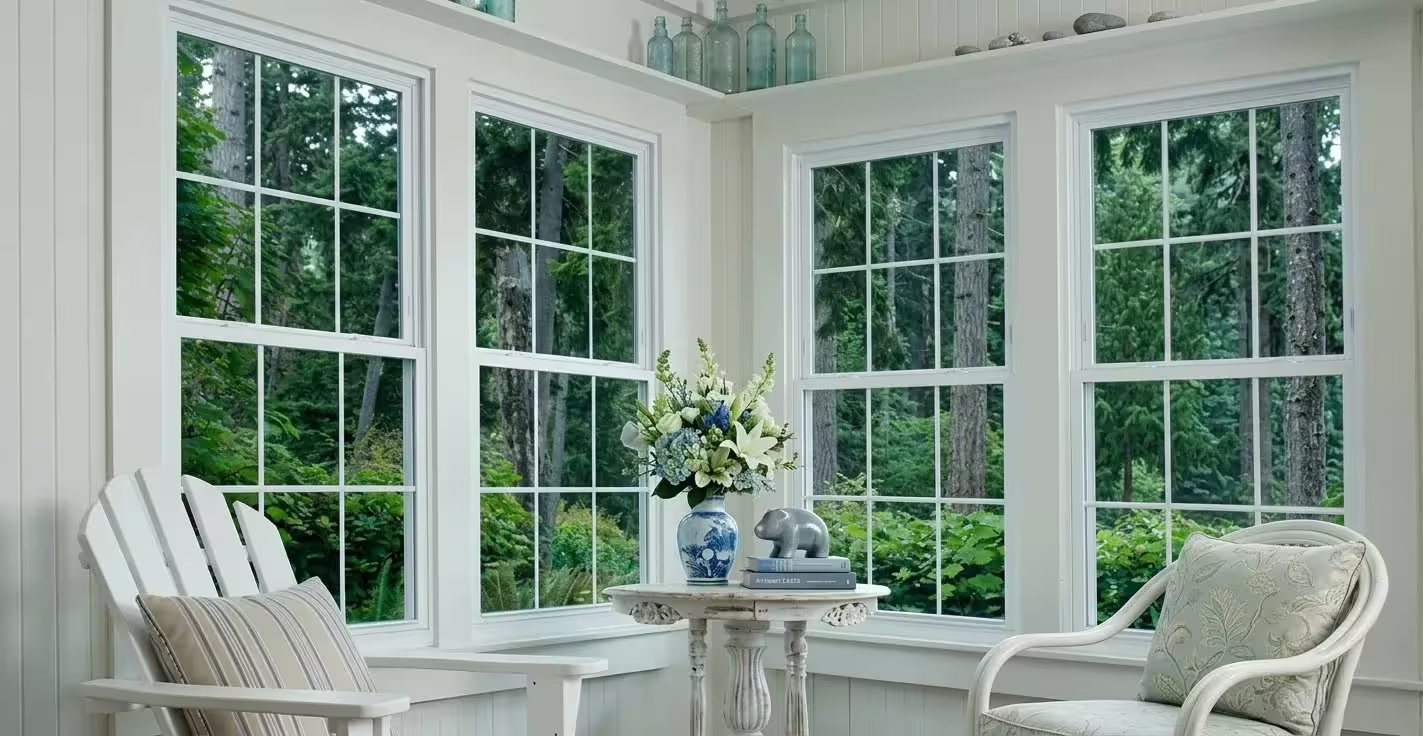
Double-Hung Windows
The most popular window in America for a reason. Double-hung windows are easy to use, easy to clean, and built to keep your home comfortable year-round, without running up your energy bill.
Learn more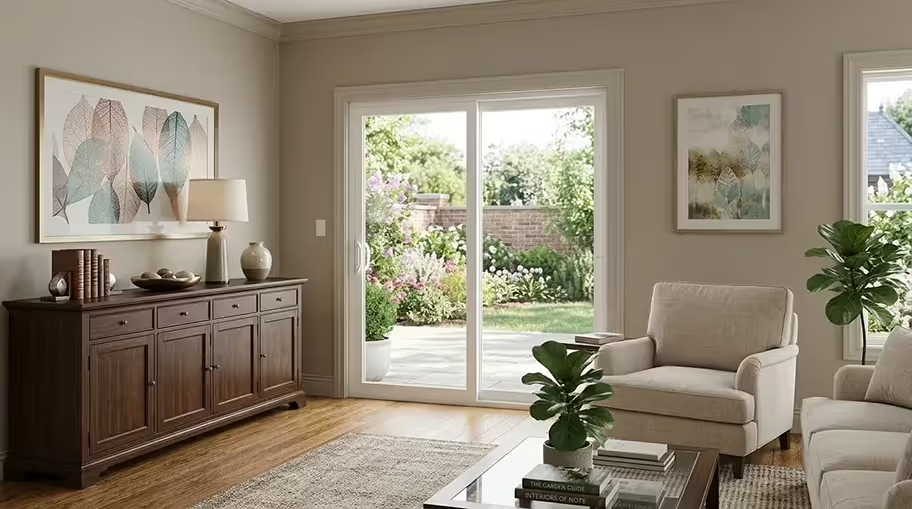
Sliding Patio Doors
Transform the feel of any room. Our sliding patio doors bring in more natural light, open up your space, and glide smoothly for years without sticking, warping, or drafting.
Learn more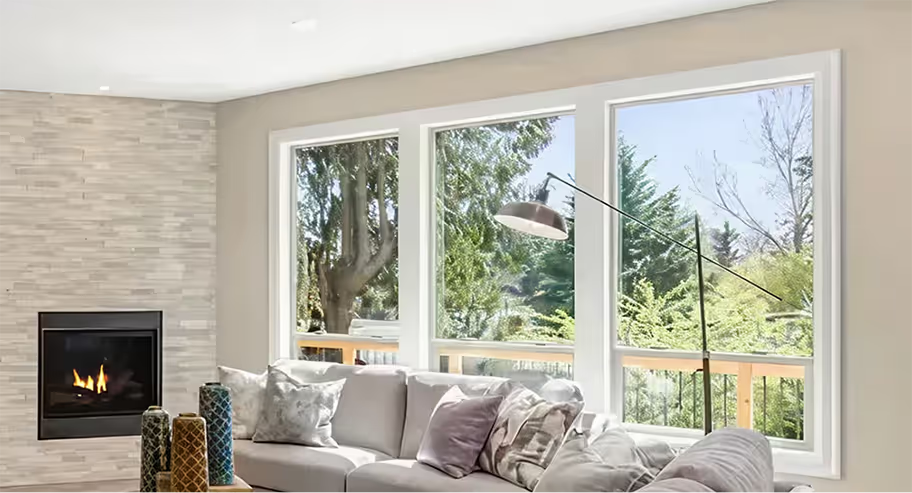
Casement & Awning Windows
Perfect for hard-to-reach spots and rooms that need better airflow. These windows seal tighter than almost any other style, keeping outside air, noise, and moisture where they belong – outside.
Learn moreNot Sure Which Windows Are Right for You?
Why Windows USA
Why Homeowners in Paducah Choose Windows USA
Windows USA designs, builds, and installs every window we sell, all backed by a lifetime limited warranty.
Why Windows USA
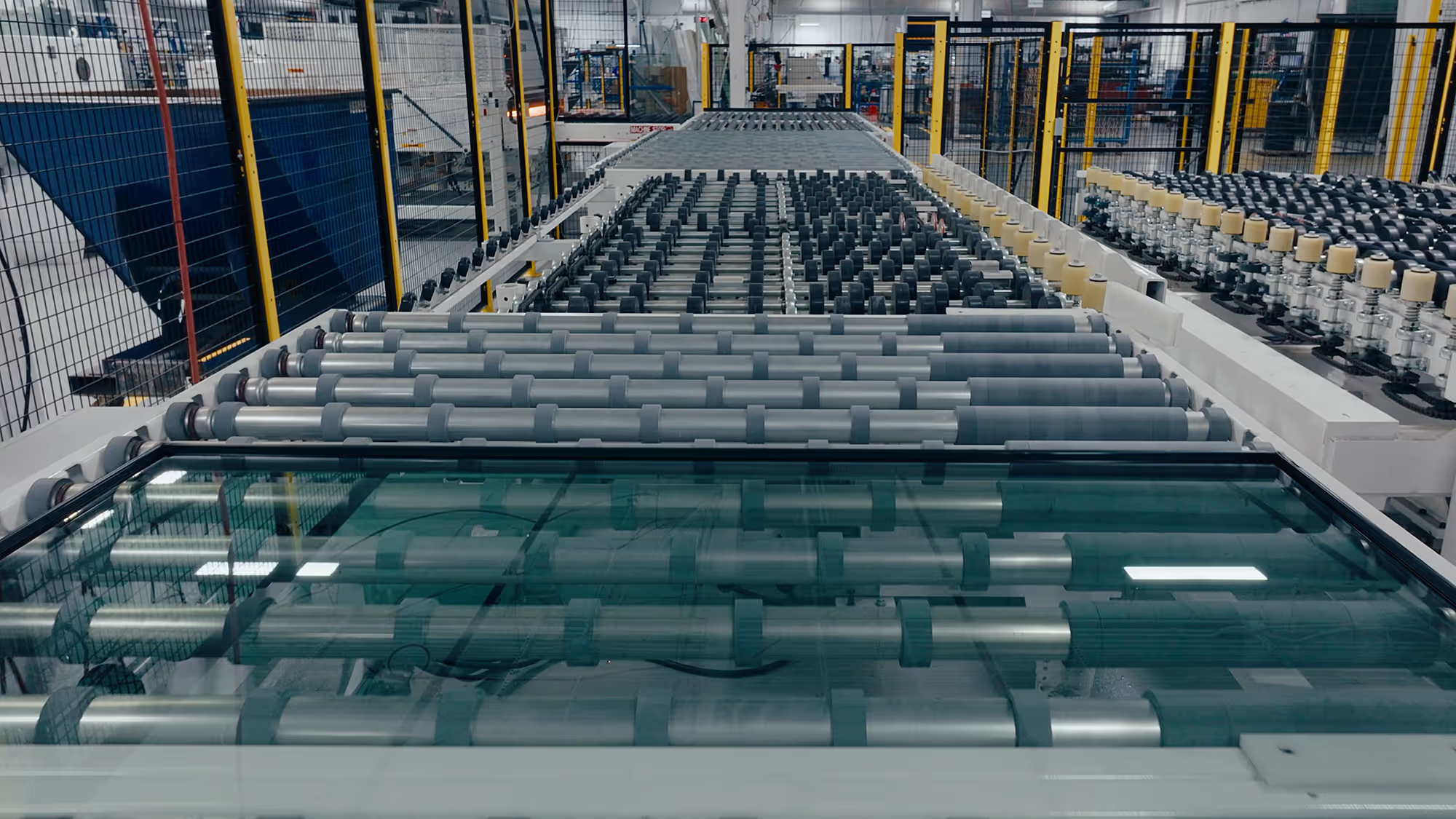
We design and build our windows in our own factory right here in America, and professional installation crews install them.
- Nearly 60 years of window manufacturing and installation experience
- Design, manufacturing, installation, and support from one company
- One company responsible - from consultation to lifetime limited warranty
- Windows built for regional climate and energy needs
Benefits
Benefits of Our Windows for Homes in Paducah
New windows do more than look good. Here's how they make a real difference in your home.

Lower energy bills with ENERGY STAR®–rated options

Improved indoor comfort year-round

Reduced outside noise

Increased home value and curb appeal

Durable vinyl frames built to last
3 Step Process
Our Simple Window Replacement Process
From first visit to finished install, we make it easy.
1. Free In-Home Estimate
We come to your home, measure properly, answer questions, and provide a window replacement estimate.

2. Custom Manufacturing
Your windows are built to fit your home exactly, using energy-efficient vinyl materials.

3. Professional Installation
Professional installers complete the job efficiently and respectfully, leaving your home clean and comfortable.

Comparing quotes from other companies? .
See the Difference
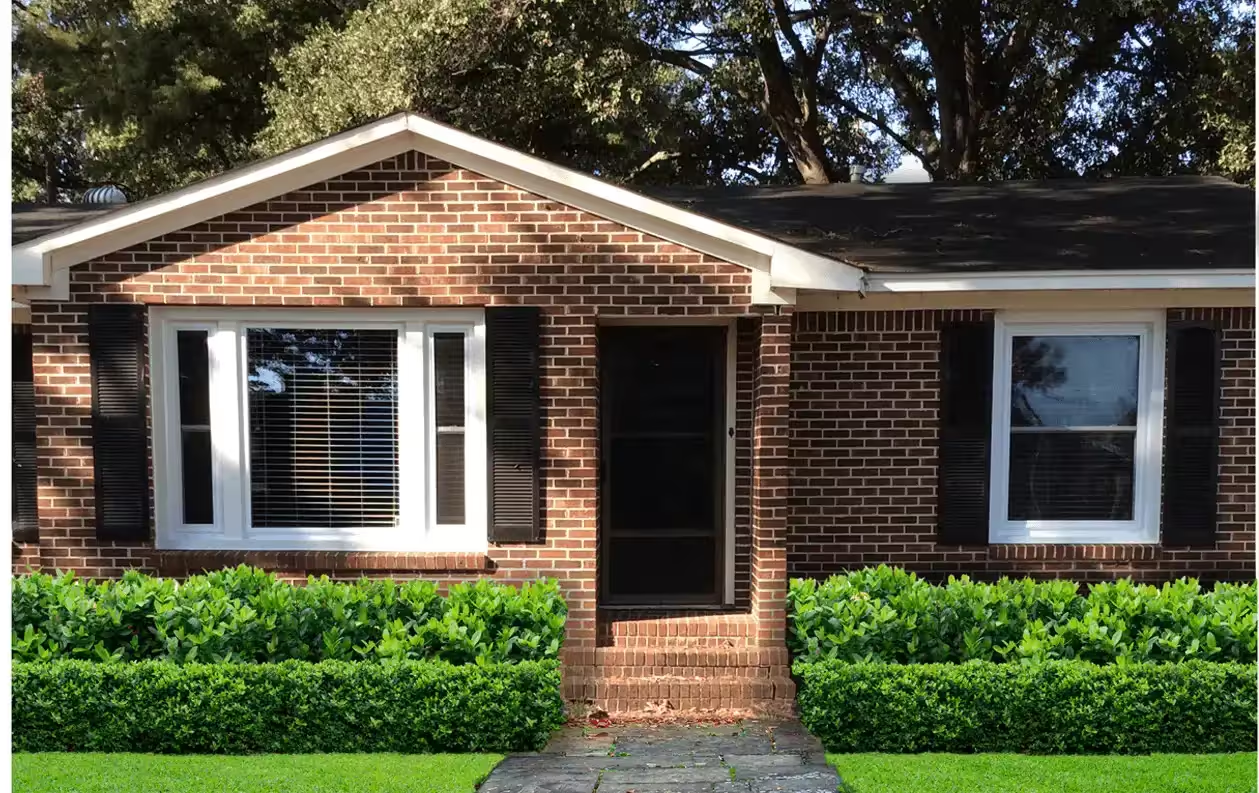
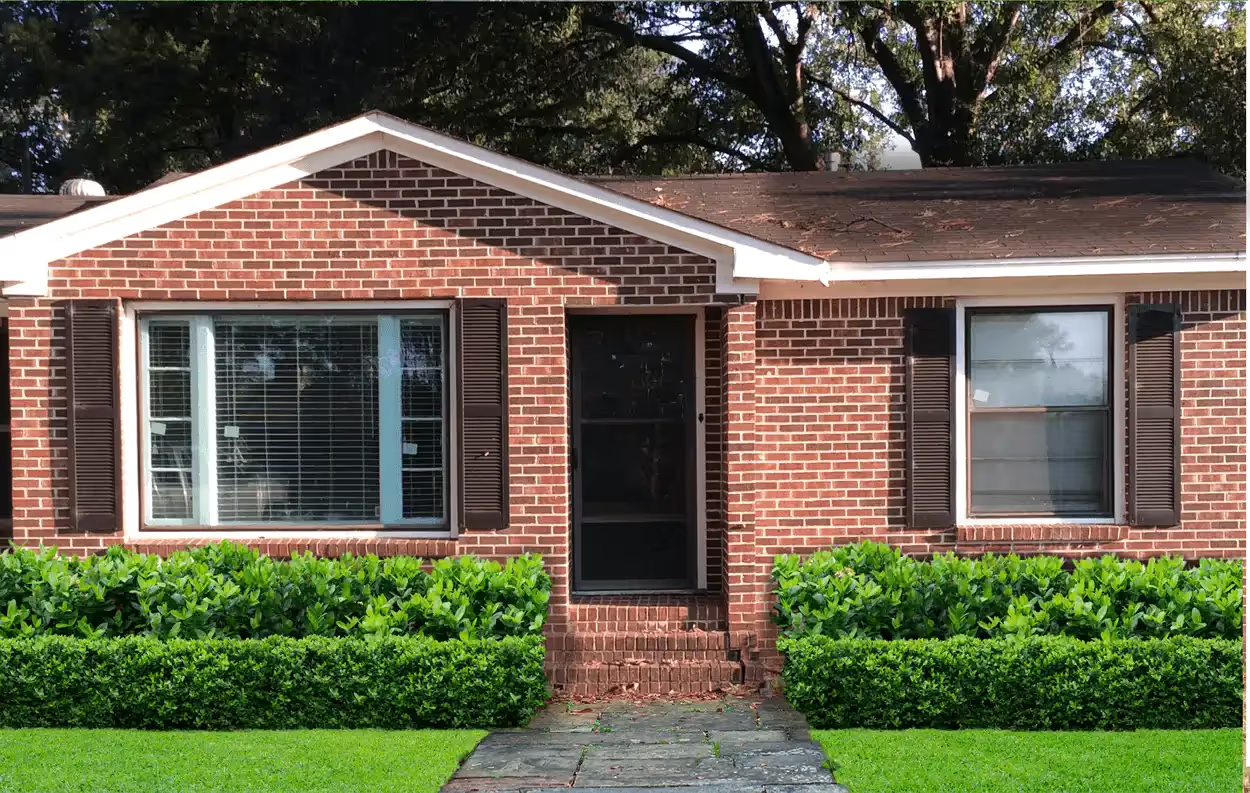
Before and After Window Replacements
See how replacement windows transform the look of a home.
Local FAQ
Window Replacement Questions in Paducah
It depends on the house, and the honest version of that answer is longer than a phone call allows. The count of openings, the size of each one, the operating styles and glass package you select, and the state of the framing under the old unit all move the number. In the older parts of Paducah the framing is the part nobody can predict from the curb. A representative measures every opening during a free in-home estimate and leaves one written price covering the finished job, with no separate labor surprise afterward. Windows USA manufactures what it installs, so that price is factory-direct instead of a figure marked up by an importer, a distributor, and a dealer along the way.
Ones that hold a seal through humidity and swing both ways thermally, because Paducah delivers hot humid summers and hard winter stretches in the same year. Our ENERGY STAR certified options pair Cardinal Low-E 366 (opens in a new tab) glass — a triple-layer coating that rejects solar heat and blocks 95% of ultraviolet light while leaving the daylight alone — with argon fill and Intercept® Ultra spacers. The frames and sashes are multi-chambered virgin vinyl, the sashes interlock at the meeting rail for one continuous seal, and weep holes drain the frame back to the outside on purpose. Details are on our windows page.
Replacing single-pane sash is where the gain is largest. ENERGY STAR reports that swapping single-pane windows for certified replacements lowers household energy bills by an average of up to 13 percent nationwide. Paducah houses tend to see that from both directions across a year — the coating and argon fill hold summer solar heat out of a room your air conditioner has been struggling with, and the same sealed assembly keeps furnace heat from bleeding through the glass on a cold January night.
In four stages, coordinated by Windows USA from consultation through installation. A consultant comes to the house for a free estimate and measures each opening individually rather than assuming a standard size. The windows are then built to those measurements at our Arkansas plant. Professional installation crews remove the old units, set and seal the new ones, and clean up before leaving. The completed work carries a transferable lifetime limited warranty that transfers to the next owner if you sell. Our process page covers each stage in more depth.
We work across McCracken County and the Purchase region around it, including Paducah itself, Lone Oak, Reidland, Benton, Mayfield, and Calvert City. Coverage continues east across the rest of Kentucky as well. The locations page lists the full service footprint, or call and ask about your specific address.
Customer Reviews
What Our Customers Are Saying?
4.7 from 2,222 reviews
★★★★★
From start to finish this was a good experience. Professional unbelievable installation and clean up. Highly recommend.
Google review
★★★★★
Excellent service, condition excellent, professionalism outstanding
Google review
★★★★★
Our old faded window are gone. Replaced with amazing beautiful windows. Installed and cleaned. I didn't lift a finger. Wow. Just wow. So happy to have great windows. Windows USA did everything they said they would. Highly recommend
Google review
★★★★★
From the start to the finish, everything was done with precision, from covering all inside to clean up. Everything was put back in the place it came from. Travis and Andrew answered all my questions and was very professional. Best ever.
Google review
★★★★★
Installation of my windows went smoothly. The windows look great and I am now experiencing quietude inside of my home because of these new windows.
Google review
★★★★★
Presentation, installation, and looks are all professional. Highly recommend if looking for quality windows for your home. Very pleased with the crew that came to install.
Google review
Areas We Serve Around Paducah
- Paducah
- Lone Oak
- Reidland
- Benton
- Mayfield
- Calvert City
Also serving Kentucky in Louisville , Lexington , Bowling Green , Owensboro — or view all locations .
A Comfortable Home Starts with the Right Windows
American Made. Factory Direct. Expert Installation.