
Limited-Time Offer
Buy 4 Windows, Get 1 Free
Window Replacement in Lexington, KY
Custom replacement windows, professional installation, and long-term support from Windows USA in Lexington
Schedule a FREE In-Home Consultation
This site is protected by reCAPTCHA and the Google Privacy Policy (opens in a new tab) and Terms of Service (opens in a new tab) apply.
or call (800) 272-2085
 Rated 4.7
  4.7Rated 4.7
 A+ratingA+rating
 certifiedEnergy Starcertified
Two Housing Markets Sharing One Set of ZIP Codes
Lexington is Kentucky's second-largest city, and for a window company it is really two markets stacked on top of each other. Inside the older ring, the distinguished historic districts hold nineteenth-century and early-1900s houses with tall original sash, deep sills, and window proportions that were drawn before anyone thought in standard sizes. Out toward Georgetown and Nicholasville, subdivisions have been filling in steadily for three decades, and the earliest of them are now old enough that their original builder-grade windows have started to give up — fogged glass, sashes that will not stay raised, vinyl that has chalked on the sunny elevation.
Those are two different problems, and they have the same answer: a window built to the opening rather than an opening cut to accept a window. Nothing Windows USA installs comes off a shelf. Every unit is manufactured at our plant in Hot Springs, Arkansas, to the measurements our representative takes at your house, which is what allows a single product line to serve a Gratz Park sash opening and a 1998 tract-house header without compromise in either direction.
What ENERGY STAR Certification Means on a Lexington Utility Bill
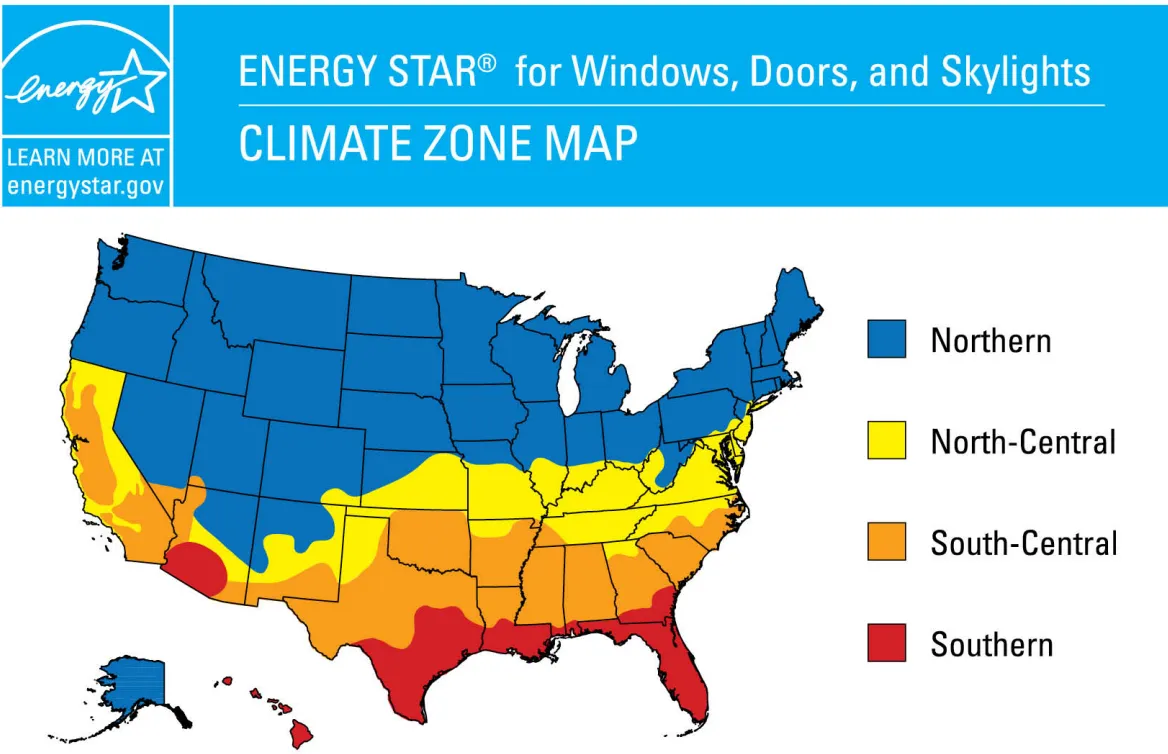
Window marketing tends to pick a season and argue from it. Central Kentucky will not cooperate with that. A Lexington house runs a real air conditioning bill from June into September and a real furnace bill from December into February, and one set of windows has to answer both without being tuned for either. Every Windows USA unit is available in ENERGY STAR certified configurations pairing Cardinal Low-E 366 glass with argon fill — an assembly that rejects solar heat pushing in on a humid afternoon and slows the heat leaving the room on a cold night.
ENERGY STAR states the payoff plainly: “Replacing old windows with ENERGY STAR certified windows lowers household energy bills by an average of up to 13 percent nationwide when replacing single-pane windows. Lower energy consumption also reduces greenhouse gas emissions from power plants and homes.” In a climate that bills you twice a year, that reduction is collected twice rather than once, which is the part homeowners tend to underestimate when they compare a quote against a single month of savings.
Tall Original Sash, and Why It Is Rarely a Standard Size
The historic districts are the reason many people move to Lexington in the first place, and their windows are a large part of why the houses look the way they do. Tall, narrow openings, generous head heights, and slender sight lines were the period's idea of a well-lit room, long before central air existed. A century and a half later, those same openings are usually the least efficient part of the wall.
Time does specific things to an opening that old. Foundations settle unevenly, masonry shifts a fraction of an inch, headers sag, and somewhere in the middle of it all a previous owner painted a sash shut and nobody has opened it since. Wood swells through a humid summer until it binds, then shrinks back and leaves a gap you can see daylight through. Cords part inside the weight pockets. The storm window bolted on in the 1970s traps moisture against the sash instead of protecting it, and the sill underneath has been quietly wet for two decades.
A replacement window only solves that if it actually fits. Measuring every opening individually — rather than measuring one and assuming the rest of the elevation matches — is not a courtesy on housing of this age; it is the entire difference between a tight seal and a permanent draft. Vinyl helps on the second front: it does not swell, rot, corrode, or need paint, so the fit you get on installation day is the fit you still have in ten years, through however many wet Augusts and freezing Januaries come in between.
Open Country, and the Wind That Crosses It
Step outside the city and the Bluegrass opens up fast — pasture, fence line, and long rises with very little to break the air moving across them. Homes on the edge of horse country, and plenty of newer subdivisions sited on former farmland, sit exposed in a way that intown houses shielded by mature trees and close neighbors are not. Wind on its own is a nuisance. Wind carrying rain is a different matter, because it stops rain from falling on a window and starts driving it into the window.
That is where a window either holds or does not, and it almost always fails at one of two places: the joint where the two sashes meet, or the sealed edge of the glass unit. Both are engineered against here. The sashes interlock where they close, forming one continuous seal along the meeting rail rather than two surfaces resting against each other. Intercept® Ultra spacers hold the insulated glass unit airtight at its perimeter, the point where double-pane windows usually fail first and start fogging. And weep holes give any water that does reach the frame a deliberate route back outside, instead of somewhere to stand against the structure until it finds the wall.
Four Full Seasons and a Humid Summer
Lexington sits at a latitude where the year genuinely turns over four times. Summers are hot and humid enough that the air feels heavy well into the evening. Winters are milder than the states to the north but far from mild, and — more punishing on a window than depth of cold — they cross back and forth over the freezing point repeatedly rather than settling into one long freeze. Spring and fall are short and volatile. Regional records are published by the National Weather Service (opens in a new tab).
Each part of that cycle attacks a window differently. Summer moisture is a materials problem: wood absorbs it and moves, and every joint that opens through August is a joint that leaks in December. The freeze-and-thaw crossings are a mechanical problem, because water sitting in a small gap expands when it freezes, and that is how small gaps become large ones over a few decades. And humid indoor air meeting a cold single pane is a condensation problem — the running water on the inside of the glass, the stained sill, the paint lifting underneath. Multi-chambered vinyl frames address all three at once: they do not absorb water, they move very little with temperature, and the sealed air pockets inside the profile keep the interior surface warm enough that condensation largely stops forming in the first place.
Ultraviolet Light and the Rooms That Take the Afternoon
According to the CDC (opens in a new tab), ultraviolet exposure is tracked nationally as an Average Daily Dose of Ultraviolet (UV) light (opens in a new tab). Kentucky does not sit at the top of that scale, and it does not need to — the damaging part of sunlight is not the part you feel on your arm. UV works steadily, invisibly, and on cool bright days as much as hot ones.
It reaches three things. It reaches the people in the room, since the International Ultraviolet Association (opens in a new tab) notes that ordinary window glass is effectively transparent to UVA, which the Skin Cancer Foundation (opens in a new tab) identifies as a main cause of premature skin aging. It reaches what is in the room, fading furniture, fabrics, flooring, and artwork & photos (opens in a new tab) season after season — which lands harder in Lexington than in most markets, because in the historic districts the original floors, mantels, and millwork are frequently the reason the house sold. And it reaches the window itself: ultraviolet wavelengths penetrate solid materials (opens in a new tab), and unprotected vinyl suffers mechanical, physical and chemical degradation from solar radiation (opens in a new tab) that appears as cracking and chalking (opens in a new tab), color shift, and lost strength underneath.
Both halves are answered in the product. The vinyl in our windows and patio doors carries a UV inhibitor, so the frame will not chalk, fade, flake, or peel on the elevation that takes the most sun — the failure that makes a decade-old cheap replacement look its age from the curb. The glass (opens in a new tab) uses a triple-layer coating that rejects solar heat by reflecting it rather than tinting the view, which is better solar control than the tinted glass often fitted in warm climates and leaves the daylight intact. It screens out 95% of the ultraviolet that would otherwise be landing on your floors all afternoon.
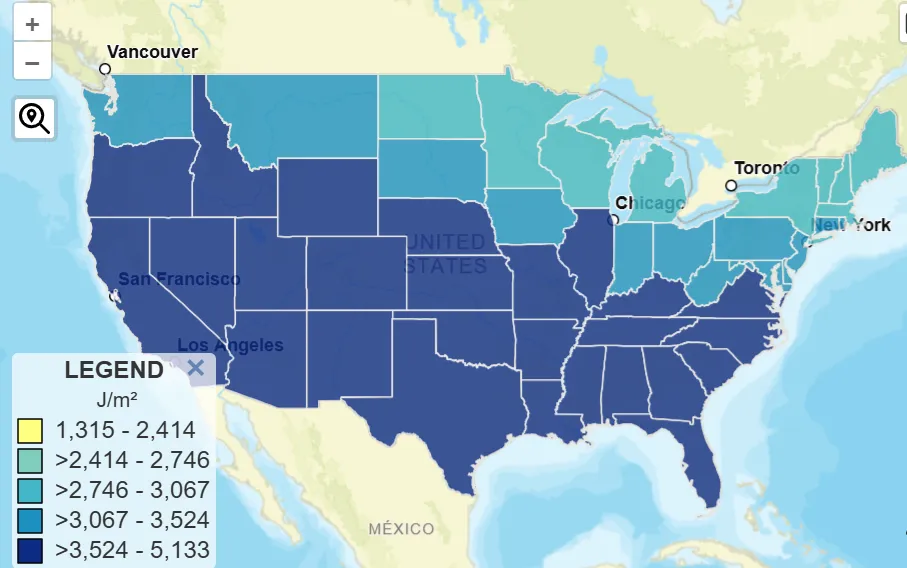
Which openings carry that load depends on which way they face, and it is worth settling before you choose glass. The U.S. Department of Energy (opens in a new tab) sets the logic out as a specification grid:
[Consumer Guide to Energy-Efficient Windows (opens in a new tab)]
The Suburbs Toward Georgetown and Nicholasville
The growth ring around Lexington has its own version of the window problem, and it surprises people who assumed a newer house was a finished house. Subdivisions built through the 1990s and 2000s were finished with whatever window met code and budget at the time, and a builder-grade unit does not fail dramatically — it fails quietly. The seal at the edge of the glass lets go and one pane fogs permanently. The balance mechanism wears and a sash will not stay up. The vinyl on the west elevation chalks a shade lighter than the rest of the house. None of it makes a homeowner call anyone, and all of it is costing something every month the system runs.
Replacing those is a straightforward job compared with a historic sash opening, but it is still measured the same way and built the same way, because framing in a twenty-five-year-old house is not necessarily where the plans said it would be. We install throughout Lexington and the communities around it, including Georgetown, Nicholasville, Versailles, Winchester, and Richmond, with professional installation crews — and the company that built your window is the company that stands behind it.
What Actually Changes, and How the Price Is Set
Put the whole assembly together and it earns its place in a Lexington home in several directions at once:
- Argon between the panes slows heat transfer both ways — less air conditioning through a humid August, less furnace through a cold February.
- Multi-chambered vinyl frames with a UV inhibitor hold their shape and their color; no swelling, rot, corrosion, or repainting, unlike the wood and aluminum they replace.
- Condensation on the interior glass largely stops, which takes the standing moisture off sills that have been feeding mildew and lifting paint for years.
- Sash that took two hands and a shoulder to raise opens with one, and modern locking hardware closes a security gap that worn original latches were never built to cover.
- The sealed double-pane unit blunts road noise, neighborhood noise, and the wind that carries it across open ground.
On price, the arithmetic is the part worth understanding. Most window quotes carry margins that have nothing to do with the window: an importer takes a cut, then a distributor, then a local dealer, each stacked on the last. Windows USA is both the manufacturer and the seller, and coordinates the job from consultation through installation, so that chain is simply shorter — and the transferable lifetime limited warranty behind the finished work is issued by the same company that built the product. Nearly 60 years in business and more than 200,000 homeowners stand behind that. The estimate is free, it happens at your house, and it ends with one written number for the finished job.
Our Products
Windows and Sliding Patio Doors
Windows and doors, each custom-built to fit your home.
Double-Hung Windows
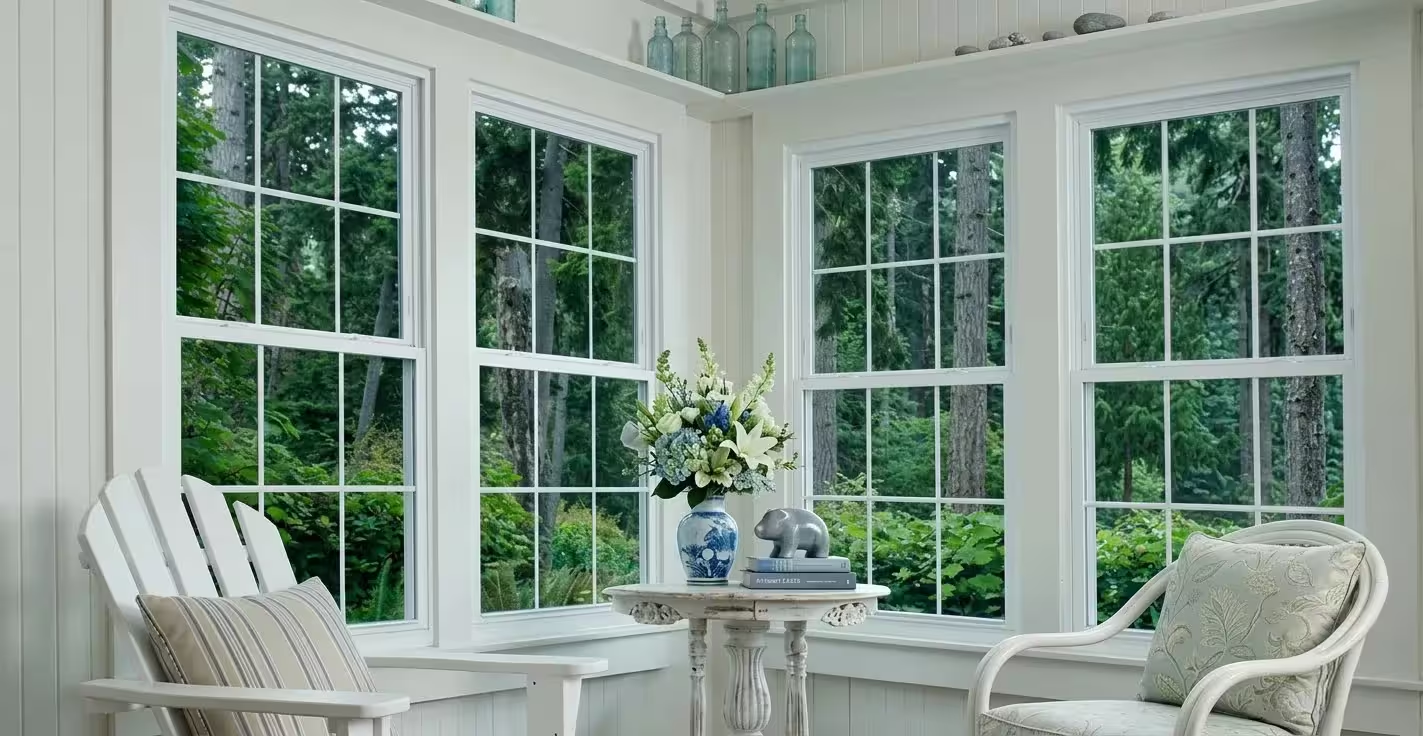
The most popular window in America for a reason. Double-hung windows are easy to use, easy to clean, and built to keep your home comfortable year-round, without running up your energy bill.
Learn more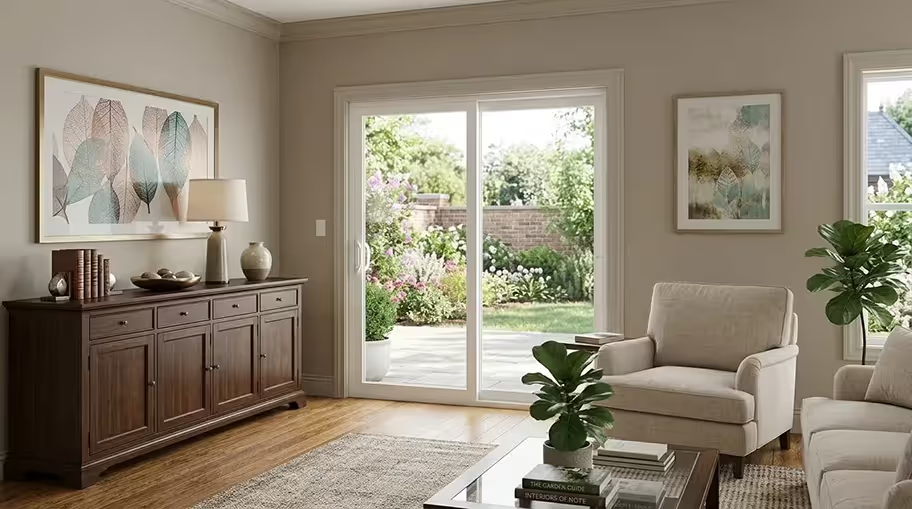
Sliding Patio Doors
Transform the feel of any room. Our sliding patio doors bring in more natural light, open up your space, and glide smoothly for years without sticking, warping, or drafting.
Learn more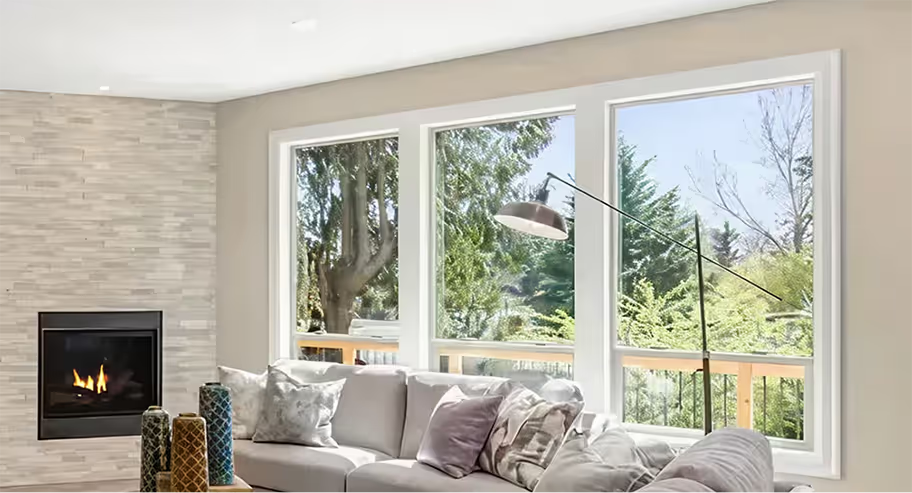
Casement & Awning Windows
Perfect for hard-to-reach spots and rooms that need better airflow. These windows seal tighter than almost any other style, keeping outside air, noise, and moisture where they belong – outside.
Learn moreNot Sure Which Windows Are Right for You?
Why Windows USA
Why Homeowners in Lexington Choose Windows USA
Windows USA designs, builds, and installs every window we sell, all backed by a lifetime limited warranty.
Why Windows USA
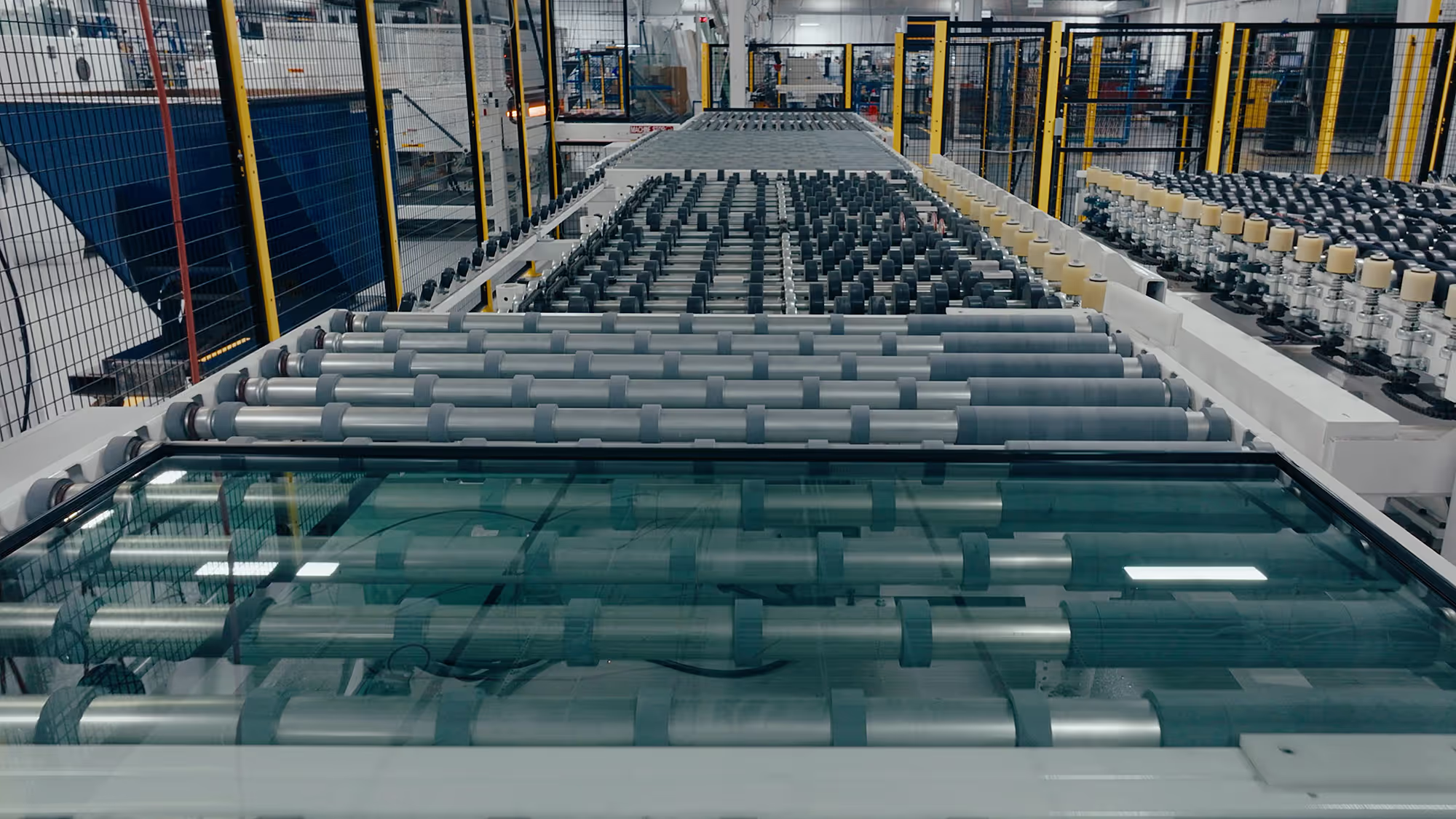
We design and build our windows in our own factory right here in America, and professional installation crews install them.
- Nearly 60 years of window manufacturing and installation experience
- Design, manufacturing, installation, and support from one company
- One company responsible - from consultation to lifetime limited warranty
- Windows built for regional climate and energy needs
Benefits
Benefits of Our Windows for Homes in Lexington
New windows do more than look good. Here's how they make a real difference in your home.

Lower energy bills with ENERGY STAR®–rated options

Improved indoor comfort year-round

Reduced outside noise

Increased home value and curb appeal

Durable vinyl frames built to last
3 Step Process
Our Simple Window Replacement Process
From first visit to finished install, we make it easy.
1. Free In-Home Estimate
We come to your home, measure properly, answer questions, and provide a window replacement estimate.

2. Custom Manufacturing
Your windows are built to fit your home exactly, using energy-efficient vinyl materials.

3. Professional Installation
Professional installers complete the job efficiently and respectfully, leaving your home clean and comfortable.

Comparing quotes from other companies? .
See the Difference
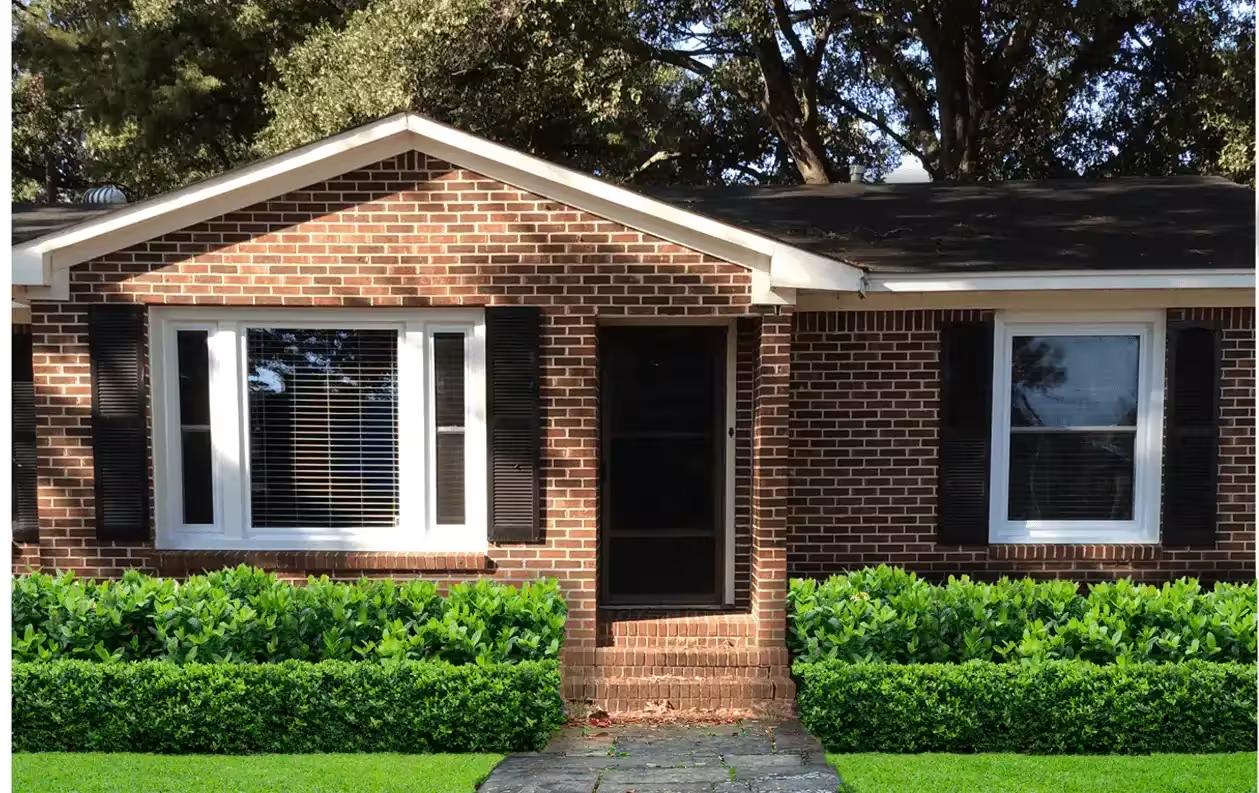
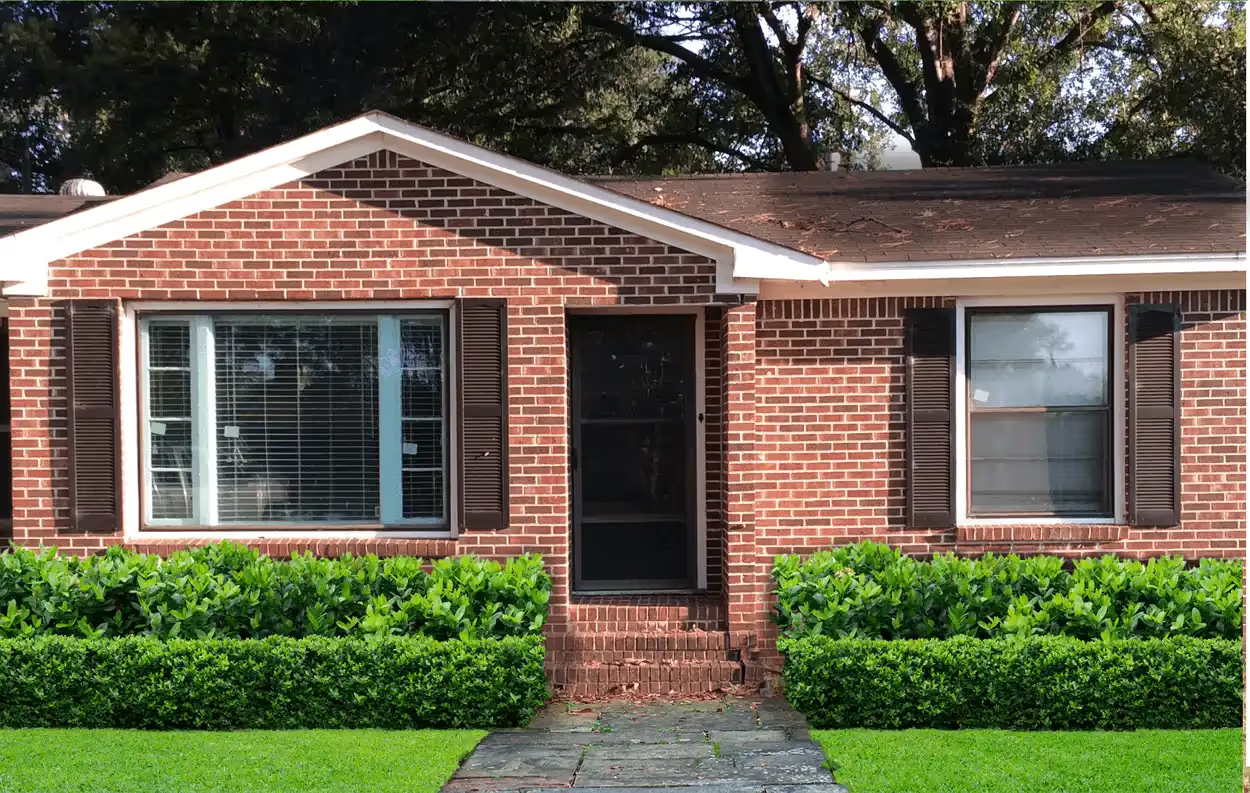
Before and After Window Replacements
See how replacement windows transform the look of a home.
Local FAQ
Window Replacement Questions in Lexington
There is no honest flat rate, because two Lexington houses a mile apart can be completely different jobs. The number of openings, the size of each one, the operating styles and glass package you choose, and the condition of the framing underneath all move the total — and in the older districts, an opening that is two inches taller than the one beside it is normal rather than unusual. A representative measures every window at your house during a free in-home estimate and leaves you one written price for the finished job. Windows USA manufactures what it sells, so that price is factory-direct instead of a figure marked up by an importer, a distributor, and a dealer in turn.
Central Kentucky runs a genuine cooling season and a genuine heating season in the same twelve months, so the assembly has to hold in both directions. Our ENERGY STAR certified options combine Cardinal Low-E 366 (opens in a new tab) glass — a triple-layer coating that rejects solar heat and screens out 95% of ultraviolet light without darkening the room — with argon fill and Intercept® Ultra spacers. Around the glass, multi-chambered vinyl frames break up the path heat takes through the profile, and interlocking sashes seal the meeting rail continuously, which is what handles the wind that crosses open Bluegrass country with nothing to slow it down. Construction details are on our windows page.
If the house still has single-pane sash, yes, and usually noticeably. ENERGY STAR reports that replacing single-pane windows with certified replacements lowers household energy bills by an average of up to 13 percent nationwide. Lexington is a good candidate because the return arrives in both halves of the calendar: the low-E coating and argon fill cut the solar load your air conditioner fights through a humid July, and the same sealed unit slows the heat your furnace loses through the glass on a January night.
One company handles every stage. A consultant comes to your home for a free estimate and measures each opening individually rather than assuming they match. Your windows are then custom-built to those measurements at our Arkansas plant. Professional installation crews pull the old units, set and seal the new ones, and clean up before they leave. The finished work carries a transferable lifetime limited warranty. Our process page walks through each step.
We install across Fayette County and the counties around it, including Lexington itself, Georgetown, Nicholasville, Versailles, Winchester, and Richmond. Coverage continues well past the Bluegrass into the rest of Kentucky. The locations page shows the full footprint, or call and ask about your address.
Customer Reviews
What Our Customers Are Saying?
4.7 from 2,222 reviews
★★★★★
From start to finish this was a good experience. Professional unbelievable installation and clean up. Highly recommend.
Google review
★★★★★
Excellent service, condition excellent, professionalism outstanding
Google review
★★★★★
Our old faded window are gone. Replaced with amazing beautiful windows. Installed and cleaned. I didn't lift a finger. Wow. Just wow. So happy to have great windows. Windows USA did everything they said they would. Highly recommend
Google review
★★★★★
From the start to the finish, everything was done with precision, from covering all inside to clean up. Everything was put back in the place it came from. Travis and Andrew answered all my questions and was very professional. Best ever.
Google review
★★★★★
Installation of my windows went smoothly. The windows look great and I am now experiencing quietude inside of my home because of these new windows.
Google review
★★★★★
Presentation, installation, and looks are all professional. Highly recommend if looking for quality windows for your home. Very pleased with the crew that came to install.
Google review
Areas We Serve Around Lexington
- Lexington
- Georgetown
- Nicholasville
- Versailles
- Winchester
- Richmond
Also serving Kentucky in Louisville , Bowling Green , Owensboro , Paducah — or view all locations .
A Comfortable Home Starts with the Right Windows
American Made. Factory Direct. Expert Installation.