
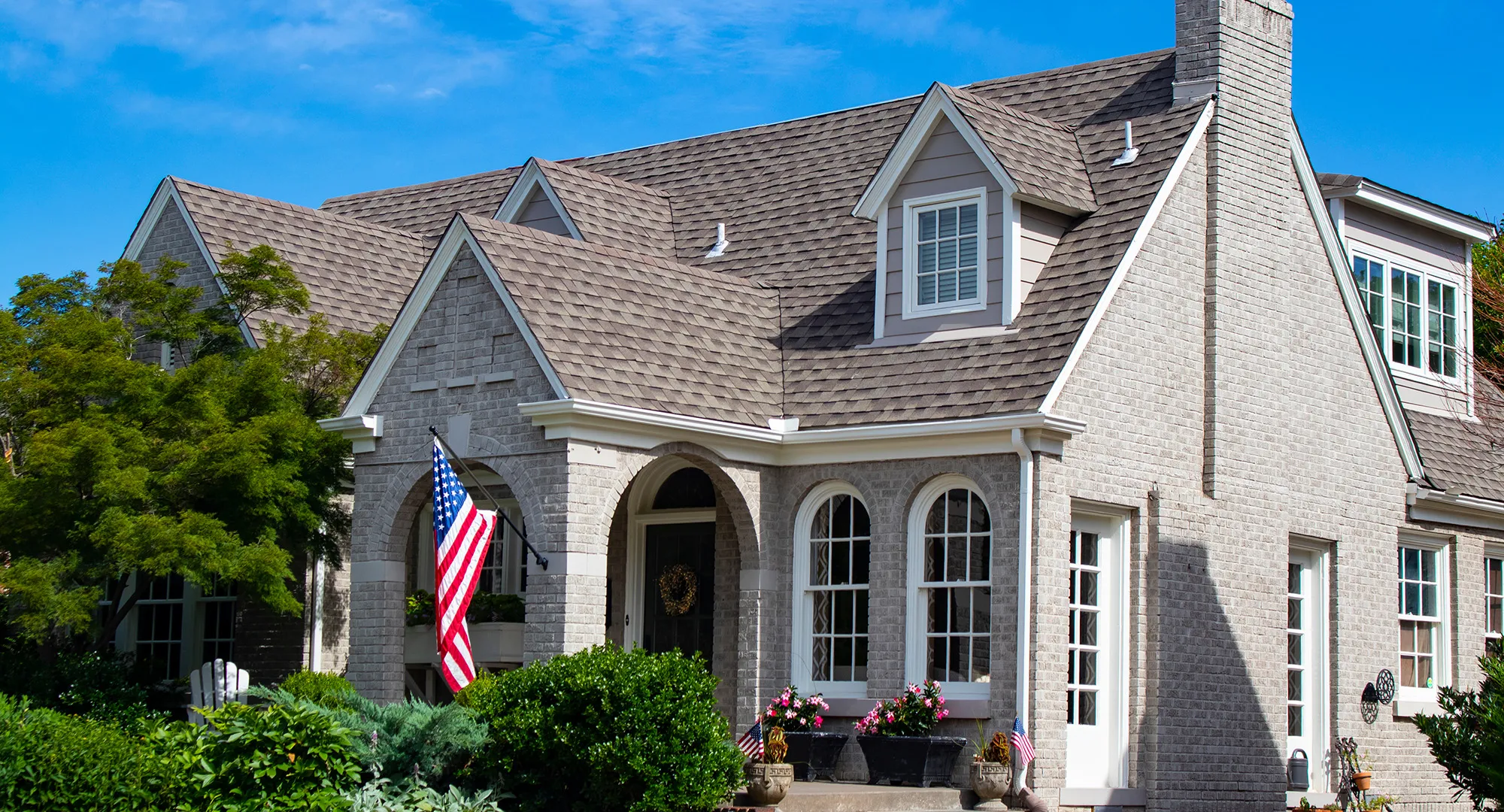
Limited-Time Offer
Buy 4 Windows, Get 1 Free
Window Replacement in Carbondale, IL
Custom replacement windows, professional installation, and long-term support from Windows USA in Carbondale
Schedule a FREE In-Home Consultation
This site is protected by reCAPTCHA and the Google Privacy Policy (opens in a new tab) and Terms of Service (opens in a new tab) apply.
or call (800) 272-2085
 Rated 4.7
  4.7Rated 4.7
 A+ratingA+rating
 certifiedEnergy Starcertified
The Warmest Corner of Illinois Asks a Different Question
Almost everything written about windows in Illinois is written about winter. Down here that advice is close to backwards. Carbondale (opens in a new tab) sits at the far southern tip of the state, below the latitude of Richmond and only a short drive from Kentucky, in the hill country the Shawnee National Forest runs through. The seasons here feel far more like the upper South than like anywhere people picture when they hear Illinois: a long, muggy summer that starts early and refuses to end, a short winter that arrives late, and humidity that hangs over the whole calendar.
That changes the specification that matters most. In a cold market the number you chase is U-factor — how well the assembly slows heat leaving the house. Here the leading number is solar heat gain: how much of the sun's energy the glass turns away before it ever enters the room. Get that wrong and you buy a window that performs beautifully on a January morning and then cooks your west rooms from June through September, which in this market is the larger share of the year.
Rejecting Solar Heat Before It Enters the Room
The most useful thing to understand about a good warm-climate window is that it does its work at the outer surface rather than inside the room. Sunlight striking ordinary glass passes almost straight through and turns into heat once it lands on your floor, your furniture, and you. At that point the air conditioner is the only tool left, and it is working against energy already inside the building.
Cardinal Low-E 366 (opens in a new tab) intercepts that energy earlier. The triple-layer coating reflects the infrared portion of sunlight — the part that carries heat — while letting visible daylight through, so a room stays bright and stays cooler at the same time. This is a genuinely different approach from the tinted or reflective glass often fitted in hot markets, which reduces heat by reducing light and leaves you with a dim room and lamps on at two in the afternoon. Behind the coating, argon fill slows the transfer across the cavity and Intercept® Ultra spacers hold the two panes as one sealed unit so the perimeter is not quietly undoing the work at the center.
The same coating screens out 95% of ultraviolet light, and in a market this sunny that is not a footnote. According to the CDC (opens in a new tab), the southern tier of states registers toward the higher end of the scale for Average Daily Dose of Ultraviolet (UV) light (opens in a new tab), and southern Illinois reaches farther into that band than the rest of the state does.
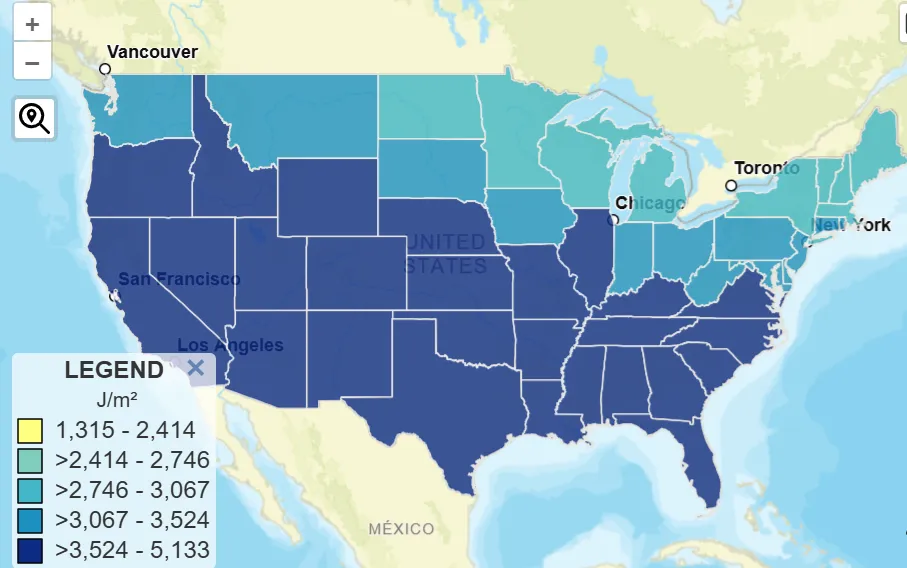
Ultraviolet is the part of sunlight that works on a house invisibly. It reaches the people in the room first — the International Ultraviolet Association (opens in a new tab) notes that ordinary window glass is no barrier to UVA, which the Skin Cancer Foundation (opens in a new tab) identifies as a main cause of premature skin aging. It bleaches what is in the room next, steadily fading furniture, fabrics, flooring, and artwork & photos (opens in a new tab) on the sunny side of the house. And it attacks the window itself, since ultraviolet wavelengths penetrate solid materials (opens in a new tab) and unprotected vinyl suffers mechanical, physical and chemical degradation from solar radiation (opens in a new tab) that shows up as cracking, chalking (opens in a new tab), color shift, and lost strength. That is why the vinyl in our windows and patio doors carries a UV inhibitor: the frame keeps its color instead of chalking out on the elevations that take the worst of it.
Which Elevations Take the Beating
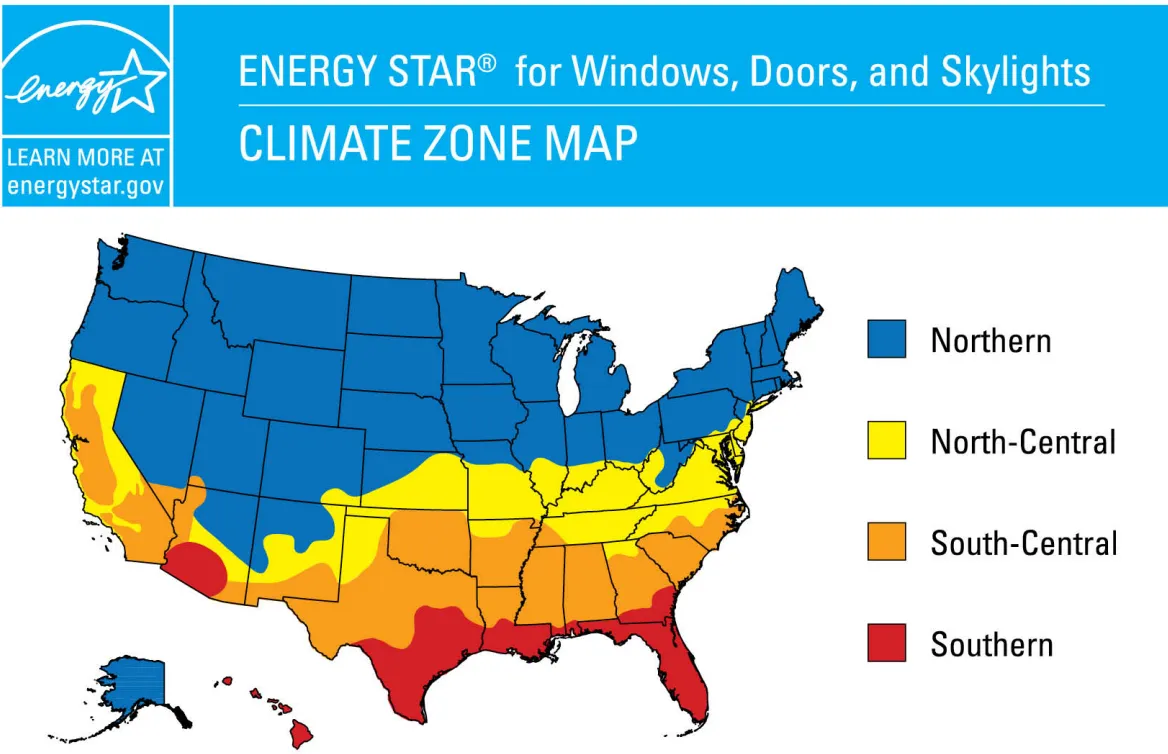
Not every window in a house has the same job, and the direction one faces changes what you should be asking of it. The U.S. Department of Energy (opens in a new tab) lays the idea out as a specification grid. For a house in Carbondale, the Warmer Climate column on the right is the one to read.
[Consumer Guide to Energy-Efficient Windows (opens in a new tab)]
Read down that right-hand column and the recommendation barely changes: low solar heat gain on every elevation, with a low U-factor alongside it. That is a warm-climate signature, and it is the opposite of what the left column tells a homeowner in northern Illinois, who is advised to let the south side collect all the winter sun it can. Here the west elevation is usually the one people complain about — late-afternoon sun arrives at a low angle, drives straight in under any overhang the house has, and lands in the rooms families are actually using at that hour. Walk your own house before you order and note which rooms are unusable in August and which are cold in January. That walk tells your representative more than a floor plan does.
Humidity, and the Water Side of the Job
Heat is only half of a southern Illinois summer. The other half is moisture, and the hill country holds it: heavy tree cover, river valleys on both sides of the county, and air that comes up from the Gulf with very little to dry it out on the way. Humidity is what makes a warm afternoon feel heavier here than the same reading does upstate, and it is the load that takes windows apart over time.
Windows fail at water before they fail at heat, and they fail in two places. The first is the sash joint, where wind-driven rain finds any gap that decades of swelling, painting, and settling have opened at the meeting rail. The second is the edge of the insulating glass unit: when that seal goes, moisture gets into the cavity between the panes and shows up as fog that cannot be wiped off from either side. A unit that has done that has already lost the gas it was built with, and no cleaning brings it back.
Our assembly is built against both. The sashes interlock where they meet rather than resting against one another, forming one continuous seal at the meeting rail. Intercept® Ultra spacers keep the double-pane unit airtight as a single component. Weep holes placed deliberately in the frame give any water that gets past the exterior a designed route back outside instead of a place to stand against the structure through a wet week. And vinyl simply does not care about humidity the way wood does — it will not swell shut in July, rattle loose in January, rot, or need scraping and repainting after a hard season.
ENERGY STAR Certified Options, and the Winter That Still Shows Up
Windows USA builds every window at its own plant in Arkansas, and ENERGY STAR certified options are available across the line. ENERGY STAR states the case plainly: “Replacing old windows with ENERGY STAR (opens in a new tab) certified windows lowers household energy bills by an average of up to 13 percent nationwide when replacing single-pane windows. Lower energy consumption also reduces greenhouse gas emissions from power plants and homes.”
Leading with cooling does not mean ignoring the heating season, and a window sold on summer performance alone will disappoint you in January. Winter here is shorter and softer than the one central Illinois takes, but it arrives, and it brings a specific nuisance with it: cold glass pulls moisture out of the air in the room. In a house this humid, an old single pane or a first-generation aluminum replacement that conducts cold straight through to the interior will sit cold enough on a raw morning that condensation forms and runs down onto the sill. Homeowners read that as a leaking window; it is usually not leaking anything, it is simply too cold. Over years that standing water lifts paint, blackens wood, and works into the framing beneath.
The fix is to raise the temperature of the interior glass surface, which the assembly does as a whole. The Low-E coating insulates as well as it reflects, argon slows transfer across the cavity, the spacers keep the perimeter from becoming a cold bridge, and multi-chambered vinyl frames keep the surround from sweating. General climate context for the region is published by the National Weather Service (opens in a new tab) office that covers southern Illinois.
Spring Storms, and What a Window Can Honestly Do
Southern Illinois sits in an active corridor for spring severe weather. Warm, moist air arriving from the south meets cold air still coming down from the north, and the collision line spends a good part of March, April, and May sitting somewhere over this part of the state.
We will not tell you a replacement window is storm protection. Nothing in a residential opening survives a direct hit, and any company that suggests otherwise is selling you something it cannot deliver. What a strong, properly drained, properly sealed window does change is how the house handles everything around those events — the sustained gusts on the leading edge of a line, the pressure swings, and the sideways rain that finds every weak joint in an old sash. That is the ordinary weather of a southern Illinois spring, it happens many times a season, and it is where a sound assembly earns its keep.
A University Town's Housing Stock
Carbondale's houses tell the story of a town built around a university. There are frame and brick homes from the early decades of the last century near the older streets, mid-century ranches through the neighborhoods that grew with the campus, and a large stock of properties that spent years as student rentals before returning to owner occupancy. Around them sit the surrounding communities — Murphysboro, Marion, Herrin, Anna — with their own mix of older in-town houses and newer construction on the edges.
Rental history leaves a particular mark on windows. Repairs get made for the next lease rather than the next thirty years: sash painted over rather than freed, storm windows screwed across the outside, the cheapest available replacement dropped into an opening during a turnover and failing a decade later. Meanwhile the house itself has settled through generations of southern Illinois weather, and the openings have gone out of true by amounts you cannot see but a window can certainly feel.
That is why nothing we install comes off a shelf. Every window is manufactured at our Arkansas plant to the measurements our representative takes at your home — not trimmed to fit on site, not ordered against a distributor's nearest stock size. It is then fitted by professional installation crews, with one company accountable if something needs to be made right, and the lack of that is far and away the most common complaint homeowners bring us about their last window job.
Factory-Direct, and What Actually Changes
Put the whole assembly together and it earns its place in a Carbondale house several ways:
- Coated glass turns away solar heat through the longest cooling season in the state, while argon slows transfer in both directions year round.
- Vinyl frames with a UV inhibitor hold their color and shape under heavy sun and heavy humidity; no warping, rot, corrosion, or repainting, unlike the wood and aluminum they replace.
- Interlocking sashes, sealed glass units, and weep-hole drainage keep wind-driven rain moving to the outside instead of into the frame.
- The sealed double-pane unit takes the edge off street, campus, and neighborhood noise.
- Modern locking hardware closes an entry point that worn-out original sashes tend to leave easy.
Most window quotes also carry margins that have nothing to do with the window — importer, distributor, dealer, each stacked on the last. Because Windows USA is the manufacturer and the seller at once, that arithmetic is simpler here, and the transferable lifetime limited warranty behind the finished work is issued by the same company that built it. Nearly 60 years in business and more than 200,000 homeowners stand behind that. The in-home estimate that starts it is free, and it is the only way to get a number that means anything for your house.
Our Products
Windows and Sliding Patio Doors
Windows and doors, each custom-built to fit your home.
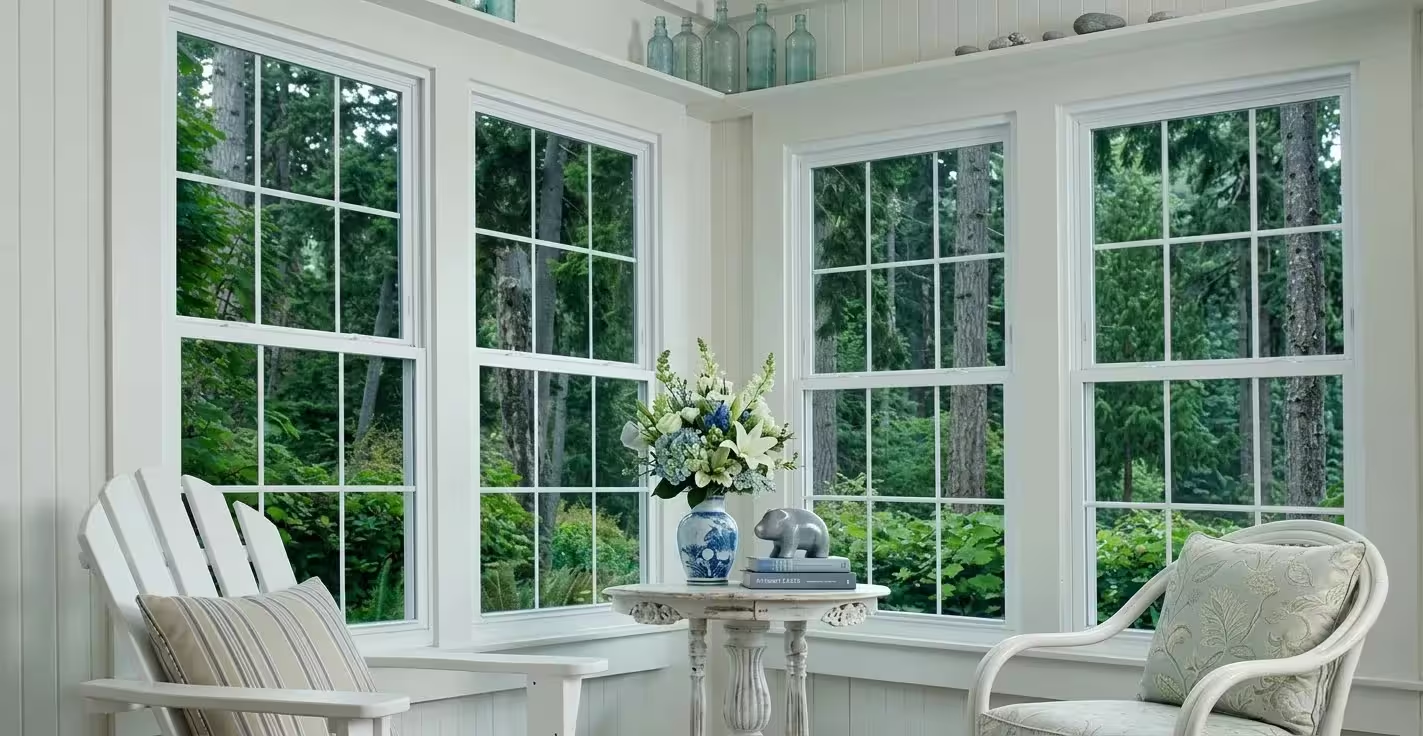
Double-Hung Windows
The most popular window in America for a reason. Double-hung windows are easy to use, easy to clean, and built to keep your home comfortable year-round, without running up your energy bill.
Learn more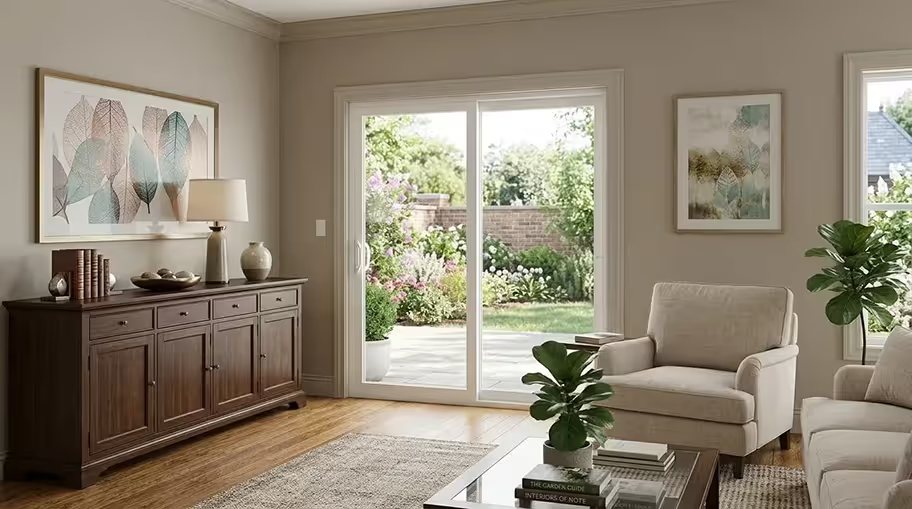
Sliding Patio Doors
Transform the feel of any room. Our sliding patio doors bring in more natural light, open up your space, and glide smoothly for years without sticking, warping, or drafting.
Learn more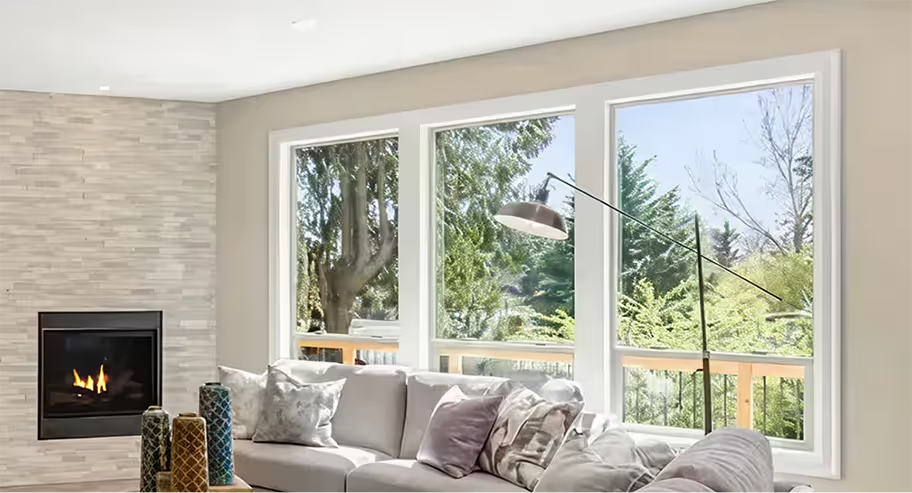
Casement & Awning Windows
Perfect for hard-to-reach spots and rooms that need better airflow. These windows seal tighter than almost any other style, keeping outside air, noise, and moisture where they belong – outside.
Learn moreNot Sure Which Windows Are Right for You?
Why Windows USA
Why Homeowners in Carbondale Choose Windows USA
Windows USA designs, builds, and installs every window we sell, all backed by a lifetime limited warranty.
Why Windows USA
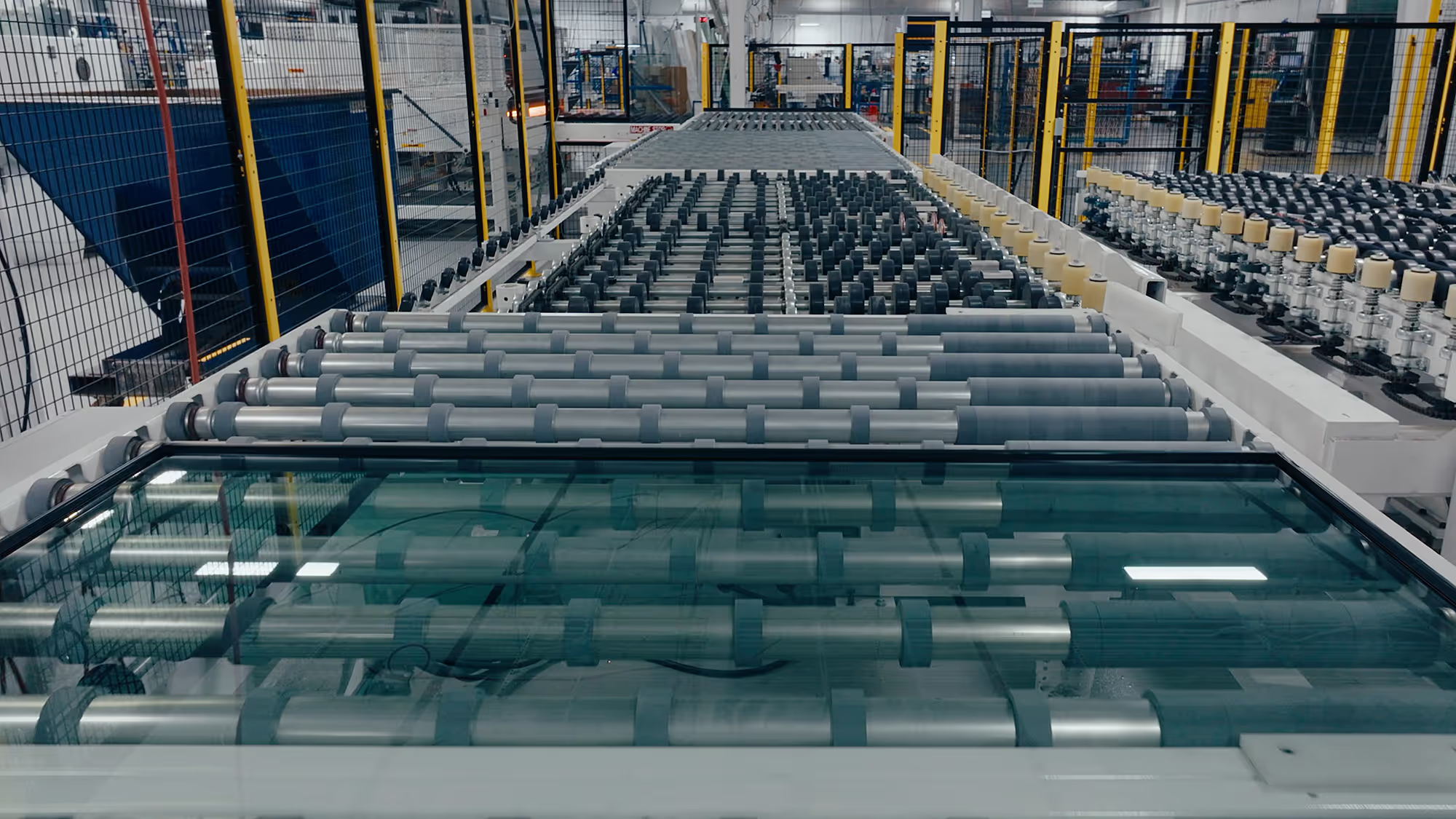
We design and build our windows in our own factory right here in America, and professional installation crews install them.
- Nearly 60 years of window manufacturing and installation experience
- Design, manufacturing, installation, and support from one company
- One company responsible - from consultation to lifetime limited warranty
- Windows built for regional climate and energy needs
Benefits
Benefits of Our Windows for Homes in Carbondale
New windows do more than look good. Here's how they make a real difference in your home.

Lower energy bills with ENERGY STAR®–rated options

Improved indoor comfort year-round

Reduced outside noise

Increased home value and curb appeal

Durable vinyl frames built to last
3 Step Process
Our Simple Window Replacement Process
From first visit to finished install, we make it easy.
1. Free In-Home Estimate
We come to your home, measure properly, answer questions, and provide a window replacement estimate.

2. Custom Manufacturing
Your windows are built to fit your home exactly, using energy-efficient vinyl materials.

3. Professional Installation
Professional installers complete the job efficiently and respectfully, leaving your home clean and comfortable.

Comparing quotes from other companies? .
See the Difference
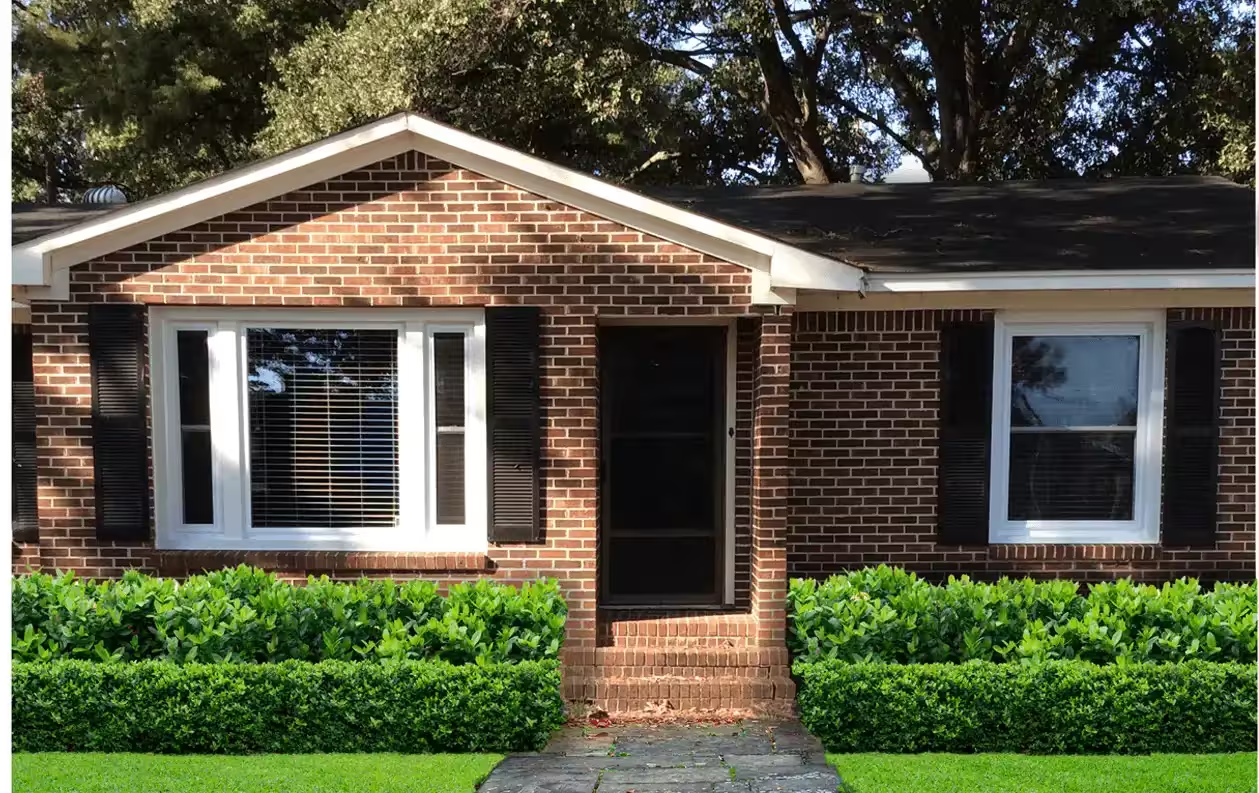
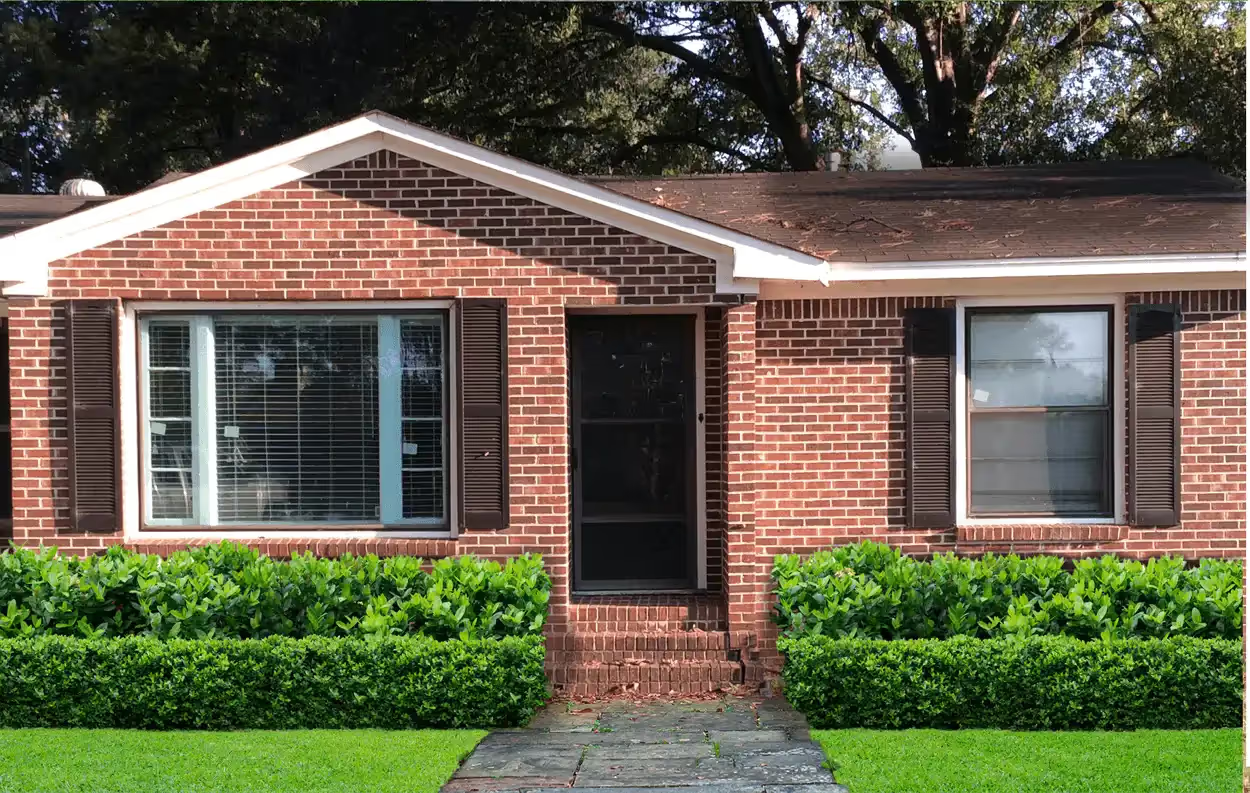
Before and After Window Replacements
See how replacement windows transform the look of a home.
Local FAQ
Window Replacement Questions in Carbondale
There is no flat rate worth quoting, because the price follows the house: how many openings you are replacing, how large each one is, the styles and glass you choose, and what the crew uncovers once the old sash comes out. A frame house near campus that has been through several rounds of landlord repairs prices differently than an owner-occupied ranch out toward Giant City. We measure every opening and quote the whole job during a free in-home estimate, and because Windows USA manufactures what it sells, that quote is factory-direct rather than a reseller's marked-up number.
This is the one corner of Illinois where the cooling side genuinely leads, so start with the glass. Cardinal Low-E 366 carries a triple-layer coating that rejects solar heat and blocks 95% of ultraviolet light without darkening the room, and argon fill with Intercept® Ultra spacers keeps that unit sealed and insulating. Multi-chambered virgin-vinyl frames and interlocking sashes then handle the shorter cold season and the humidity that runs most of the year. See how they are built.
If your house still has single-pane sash, yes, and here the savings show up first on the cooling side. ENERGY STAR reports that replacing single-pane windows with certified ones lowers household energy bills by an average of up to 13 percent nationwide. Southern Illinois runs the longest cooling season in the state, so a coating that turns away solar heat before it ever enters the room is doing work here for more months of the year than it would anywhere north of you.
It begins with a free in-home estimate: a representative measures each opening at your house and walks through styles, glass, and hardware. Your windows are then built to those exact measurements at our Arkansas plant — nothing comes from stock sizes — installed by professional installation crews, and backed by a transferable lifetime limited warranty. The process page walks through each step between the estimate and installation day.
We install across southern Illinois, including Carbondale itself, Murphysboro, Marion, Herrin, and Anna, as part of our wider coverage throughout Illinois. The locations page lists the full footprint, or call and give us your address and we will tell you whether a crew works your street.
Customer Reviews
What Our Customers Are Saying?
4.7 from 2,222 reviews
★★★★★
From start to finish this was a good experience. Professional unbelievable installation and clean up. Highly recommend.
Google review
★★★★★
Excellent service, condition excellent, professionalism outstanding
Google review
★★★★★
Our old faded window are gone. Replaced with amazing beautiful windows. Installed and cleaned. I didn't lift a finger. Wow. Just wow. So happy to have great windows. Windows USA did everything they said they would. Highly recommend
Google review
★★★★★
From the start to the finish, everything was done with precision, from covering all inside to clean up. Everything was put back in the place it came from. Travis and Andrew answered all my questions and was very professional. Best ever.
Google review
★★★★★
Installation of my windows went smoothly. The windows look great and I am now experiencing quietude inside of my home because of these new windows.
Google review
★★★★★
Presentation, installation, and looks are all professional. Highly recommend if looking for quality windows for your home. Very pleased with the crew that came to install.
Google review
Areas We Serve Around Carbondale
- Carbondale
- Murphysboro
- Marion
- Herrin
- Anna
Also serving Illinois in Peoria , Springfield, IL , Decatur , Mount Vernon — or view all locations .
A Comfortable Home Starts with the Right Windows
American Made. Factory Direct. Expert Installation.