Search for window replacement cost and you’ll find plenty of confident-sounding numbers. Most of them are close to useless, because a window quote isn’t a price off a shelf — it’s the sum of a dozen decisions about your specific house. Two homes on the same street can get very different numbers for what looks like the same job.
That doesn’t mean cost is a mystery. The variables are knowable, and once you understand them you can read any quote you’re handed and tell whether it’s fair. Here’s what actually moves the number.
What Determines Window Replacement Cost?
How many windows you’re replacing
The obvious driver, but with a wrinkle: cost per window usually drops as the count goes up. A crew has to travel to your house, set up, protect your floors, and clean up whether they hang three windows or twenty-three. Spreading that fixed effort across more openings is why whole-home projects tend to price better per window than one-off replacements — and why replacing in phases can cost more overall than doing it at once.
Size and shape of the openings
Windows are priced by the glass and frame material they consume, so a wide picture window over the living room costs more than a small bathroom unit. Non-rectangular openings — arches, half-rounds, angled tops on a gable wall — add fabrication work. If your home has a few of these, expect them to carry more weight in the total than their count suggests.
Window style
A double-hung window, a slider, a casement, and a bay all do different mechanical work, and that shows up in the price. Operating windows cost more than fixed ones. Bays and bows are the most involved because they project from the wall and need their own structural support and exterior finishing. Mixing styles across a house is normal; just know that swapping a fixed window for an operating one changes the number.
The glass package
This is the single most misunderstood line on a quote. Two windows that look identical from the driveway can have completely different glass inside — different Low-E coatings, gas fill or plain air between the panes, different spacer material at the edge. That glass package is a large share of both the price and the actual performance you’ll feel. When you compare quotes, compare glass first. You can read what goes into ours on the our windows page.
Installation complexity
What the crew finds when the old window comes out matters. Rotted sills, failed framing, old aluminum or steel units, homes with brick, stucco, or stone exteriors, and second- or third-story openings all take more labor and more care than a straightforward vinyl-sided ranch. A good estimator looks for this before quoting rather than discovering it mid-job.
Disposal and cleanup
Your old windows have to go somewhere. Haul-away and site cleanup are real costs — the question is whether a company includes them in the quoted price or adds them after. Ask.
Why Do Window Quotes Vary So Much Between Companies?
Here’s the part nobody explains at the kitchen table: two quotes for the same house can differ substantially and both can be honest, because the money is traveling through different numbers of hands.
In the typical chain, a factory builds the window, sells to a distributor, who sells to a dealer, who sells to you. Every link takes a margin, and every link is somebody you’d have to call if something goes wrong later.
A manufacturer-direct company shortens that chain. Windows USA builds its custom vinyl windows in its own Arkansas plant and sells them directly to you, with installation by professional installation crews, so factory-direct pricing isn’t a slogan about a sale — it’s a description of how few parties are between the plant and your wall.
This is also why “50% off” style advertising deserves a raised eyebrow across the industry. A discount is only meaningful relative to a real starting price. What you should be comparing is the final, all-in number for a defined scope of work — not the size of the markdown.
Do Custom Windows Cost More Than Stock Windows?
Not the way people assume. A stock window comes in fixed sizes off a warehouse shelf. When your opening doesn’t match one of those sizes — and in an older home, it usually doesn’t — the gap gets filled with expander trim and extra sealant. That’s more labor at install, a wider frame that eats into your glass area, and more places for air to get through in a few years.
A custom window is manufactured to the measurements of your actual opening. The window fits the hole it was built for. That removes the shimming-and-filling step, keeps the glass area you paid for, and gives you a tighter seal that stays tight. The material cost of building to size is small; the installed difference in fit and longevity is not.
How to Compare Window Quotes Apples-to-Apples
Get everything in writing, then line the quotes up side by side and check that each one answers the same questions:
- What exactly is the window? Frame material, chamber construction, style per opening, and the specific glass package — Low-E type, gas fill, spacer material.
- How many windows, and which openings? A quote that says “whole house” without an opening-by-opening list can’t be compared to one that itemizes.
- Is installation included, and by whom? Who is responsible if an installation problem shows up later?
- What’s included beyond the window? Interior and exterior trim work, caulking, screens, hardware, disposal of the old units, cleanup.
- What’s the warranty, and what does it actually cover? Glass, frame, hardware, labor, and whether it transfers if you sell.
- What’s the payment schedule? Deposit, progress payments, final payment on completion.
If a quote is a single number on a single line, that’s not a quote you can compare — it’s a number you have to trust. Ask for the breakdown.
That list is also, more or less, what our price match guarantee asks for: a written, verifiable quote from a licensed and insured window replacement company, for the same number and style of windows, with comparable frame material, glass package, energy ratings, and installation scope. If you bring us one within 30 days of signing and its total installed price is lower, we match it — which means the comparison above is worth doing whether or not you end up buying from us.
Financing and the Long-Term Math
Most homeowners don’t pay for a whole-home window project out of a checking account, and they don’t have to. Financing turns a one-time number into a monthly one, which is usually the number that actually matters to a household budget. You can see the options on our financing page.
There’s also an offset worth putting on the other side of the ledger. According to ENERGY STAR, replacing single-pane windows with ENERGY STAR certified windows lowers household energy bills by an average of up to 13% nationwide. That’s an average across climates, so your own result depends on where you live, what you’re replacing, and how your home is used — but it means the monthly cost of the project is partly offset by the monthly cost of heating and cooling you stop paying. Comfort, noise, and the end of chasing drafts with plastic film don’t show up on the utility bill at all.
The Only Number That’s Really Yours
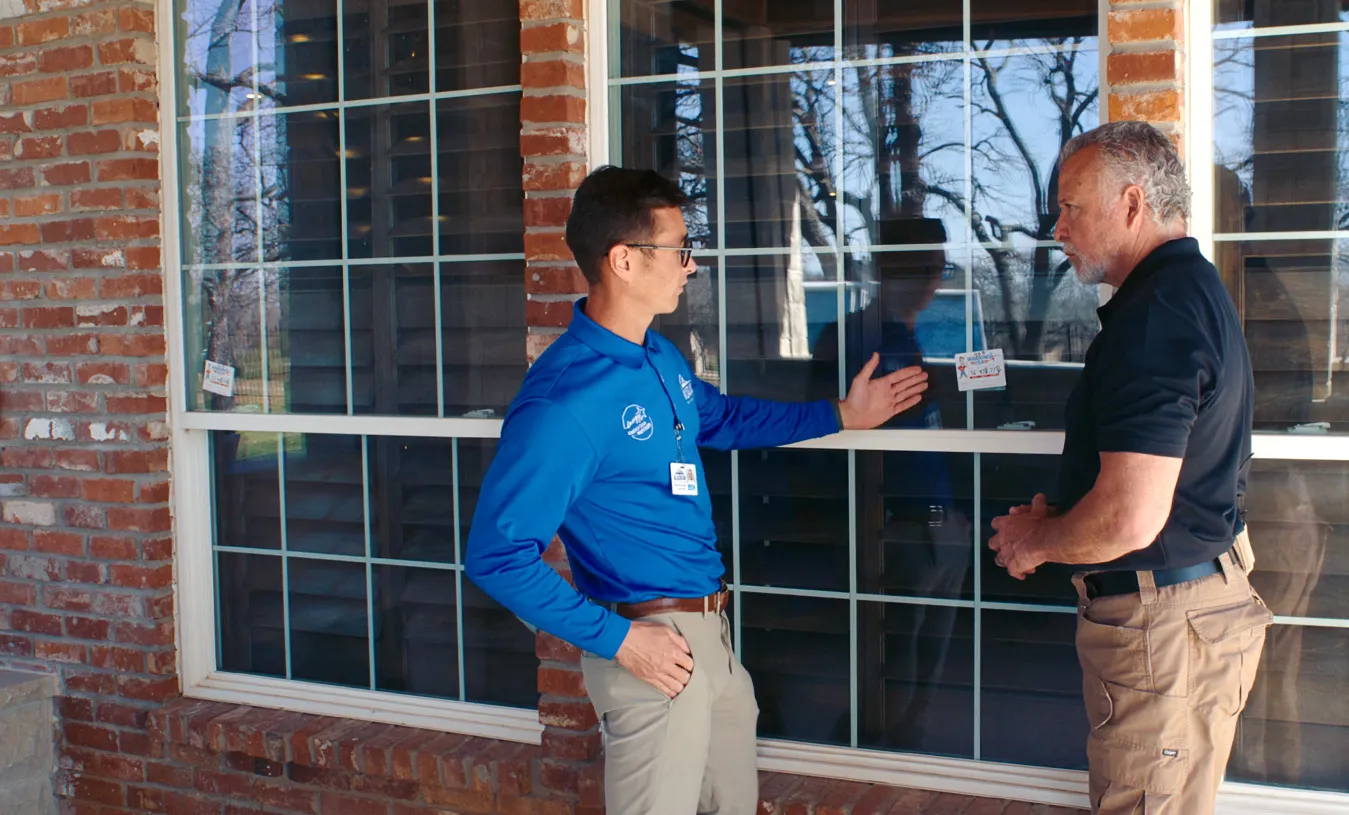
Everything above is how to think about cost. The actual figure comes from someone standing in your house, measuring your openings, looking at your existing frames, and pricing the work in front of them. That’s what a free in-home estimate is for, and it’s why we don’t publish a price list — a published range would either be so wide it tells you nothing or so narrow it would be wrong for most homes.
You can see what happens at that appointment on our process page, and find the market nearest you on our locations page. Bring your questions and your other quotes. A company that’s confident in its windows won’t mind being compared — ours is confident enough to put a price match guarantee behind it.