Choosing a window company is harder than choosing windows. The windows are a product you can look at and touch. The company is a promise about what happens over the next twenty years — whether the install is done right, whether anyone answers when a sash won’t latch in year six, whether the business is still there at all.
Most homeowners get two or three in-home estimates and end up comparing prices, because price is the one number everybody gives them. These seven questions give you something better to compare. Ask all of them to every company you talk to, including us. The answers sort things out quickly.
1. Who actually manufactures these windows?
This is the first question, and a surprising number of window companies can’t answer it cleanly.
Much of the industry is resellers. A company sells you a window built by a manufacturer it has no ownership of, often bought through a distributor in between. That isn’t automatically bad — plenty of good windows are sold this way — but it has consequences. Product specs can change when the reseller changes suppliers. Custom sizing depends on what the factory will accept. And when there’s a defect, you’re dealing with a company that has to go ask someone else.
Why it matters: the fewer companies between the plant and your wall, the shorter the line of accountability and the fewer margins stacked into your price.
Our answer: Windows USA manufactures its own custom vinyl windows at its plant in Arkansas. Every window is built to the measurements of the specific opening it’s going into, and the company that built it is the company that sold it to you. More on that on our made in the USA page.
2. Who’s actually going to install them?
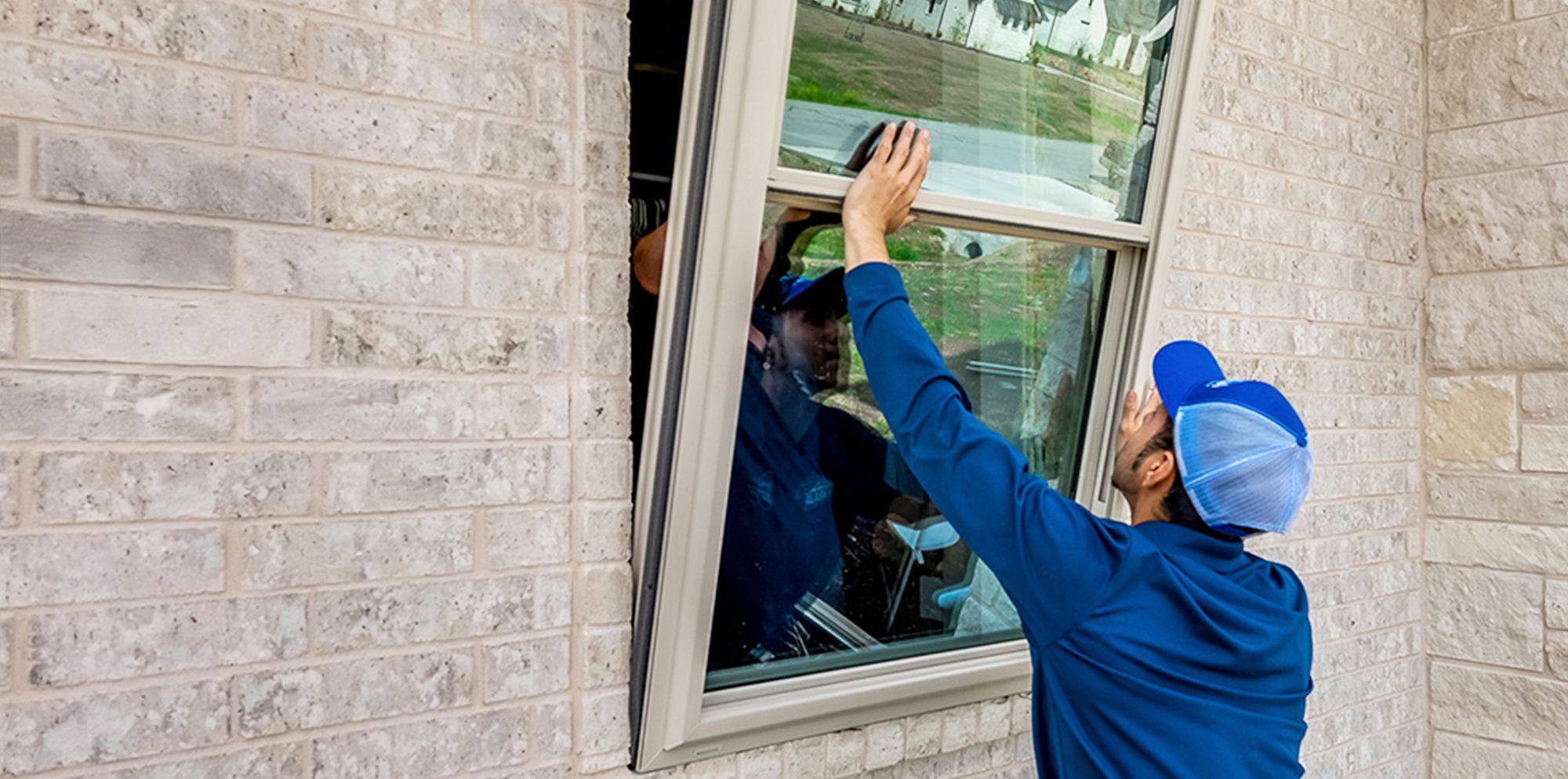
The salesperson at your table is often not from the same company that built the window, and the crew that shows up may answer to yet another business. Installation is where a lot of window projects go sideways — because a window’s performance is mostly a function of how well it was installed. The best window in the world, set crooked in an opening that wasn’t prepped, will leak air and stick in its track.
Ask directly: who will install the windows, how are they trained on this product, and who is on-site supervising? If an installation problem shows up later, which company is responsible for fixing it?
Why it matters: installers trained on one product line work to one standard, and a company that builds, sells, and warrants the window has every reason to make sure it goes in right. When the manufacturer, the seller, and the installer are three unrelated businesses, a problem can bounce between them.
Our answer: professional installation crews trained on our windows handle the installation, coordinated by Windows USA from consultation through cleanup. They install the windows our own plant built, and one company is accountable for the whole job, which makes it a short conversation when something needs adjusting. You can see how a job runs start to finish on our process page.
3. What exactly does the warranty cover — and does it transfer?
“Lifetime warranty” is one of the most oversold phrases in home improvement. The phrase itself tells you almost nothing. The coverage document tells you everything, so ask for it before you sign, not after.
Read for these specifics:
- What components are covered? Frame, sashes, and insulated glass are the usual three. Hardware — locks, balances, rollers — is often where coverage thins out, and hardware is what actually wears.
- Is labor covered, or only parts? A free replacement sash you have to pay someone to install is a partial warranty.
- Whose lifetime? Some warranties end when the original purchaser sells the house.
- Does it transfer to the next owner? A transferable warranty is worth real money at resale and is a signal the company expects to still exist.
- What voids it? Look for the exclusions section, and read it.
Our answer: Windows USA offers a lifetime limited warranty with transferable coverage. Ask for the document at your estimate and read it against whatever else you’ve been handed.
4. Are they licensed and insured in your state?
Licensing requirements vary by state and by trade, so what you’re checking is that the company meets whatever your state requires and can prove it. Insurance is less variable and more important: general liability coverage for damage to your home, and workers’ compensation for the people on ladders against your siding. If a crew member is injured on an uninsured job, the exposure can land on the homeowner.
Why it matters: ask for current certificates, not verbal assurance. A legitimate company produces them without friction, because they get asked all the time.
Also check that the company is genuinely established in your area rather than passing through. Storm-chasing outfits appear after weather events, sell aggressively, and are gone before the warranty matters. Our locations page lists the markets we serve, with local pages for places like Little Rock, Oklahoma City, and Memphis.
5. What happens after the sale?
This is the question that separates companies most sharply, and almost nobody asks it — because at estimate time you’re thinking about getting windows, not about needing help two years later.
Ask: if a window has a problem in year three, who do I call? Is there a service department, or do I call the salesperson? What’s a typical response time? Is there a charge for a service visit under warranty? Do you keep records of my order — the exact sizes, glass package, and hardware — so a replacement part matches?
Why it matters: a company that manufactures its own product can pull your original order and build the part. A reseller has to place an order with a factory that may have discontinued the line. That difference is invisible on the day you sign and very visible the day you need it.
6. What do verified customer reviews actually say?
Every company has good reviews on its own website. Go looking for the ones it didn’t curate: Google, the Better Business Bureau, and any state consumer-protection listings.
Read past the star rating. What you want to know is the pattern in the middle and negative reviews — and specifically how the company responded. Every business with enough volume has unhappy customers. A company that replies, takes it offline, and fixes it is telling you what your own bad day would look like. Silence, or defensive replies, tell you the same thing.
Weight recent reviews more heavily than old ones, and pay attention to how long the company has been operating under the same name. Windows USA has been in business nearly 60 years, has installed more than 2 million windows for over 200,000 homeowners, and holds an A+ rating with the BBB — all things you can verify yourself rather than take from a brochure.
7. Will you put the whole scope in writing?
The last question is procedural, and it protects you no matter which company you pick. Ask for a written quote that lists every opening, the exact window style and glass package for each, what installation includes, disposal of the old units, cleanup, the payment schedule, and the warranty terms. Then compare that against the other written quotes you’ve collected.
Anything a salesperson promises verbally that isn’t in the document doesn’t exist. That’s not cynicism about any particular company — it’s just how contracts work, and the good companies will write it down without being pushed.
Take Your Time
The pressure to decide today is the loudest signal in this whole industry. A real quote holds up for a reasonable window of time, and a company that’s confident in its product wants you to compare it. Get three estimates, ask all seven questions, read the warranties, and pick the company whose answers you can verify.
If you’d like ours in person, the free in-home estimate is where those answers come with measurements attached.